
Oil & Grease Stain Treatment:
A Cleaner Surface Starts Here
Oil stain removal takes more than a quick rinse. Learn how we assess greasy concrete, choose a suitable treatment, and set realistic expectations for your property.
Request an Oil Stain AssessmentOil stain removal targets the dark marks left by vehicle leaks and greasy spills. Treatment can reduce staining and remove surface buildup. However, old oil may soak deep into concrete and leave a lasting shadow.
From home driveways to busy service areas, each surface needs a suitable plan. This guide explains the cleaning process and the limits of stain treatment.
Two problems. Two cleaning goals. Grease on the surface needs degreasing. Oil inside the pores may need a separate spot treatment. A single washing pass may not solve both.
Why Oil and Grease Stains Are Hard to Clean
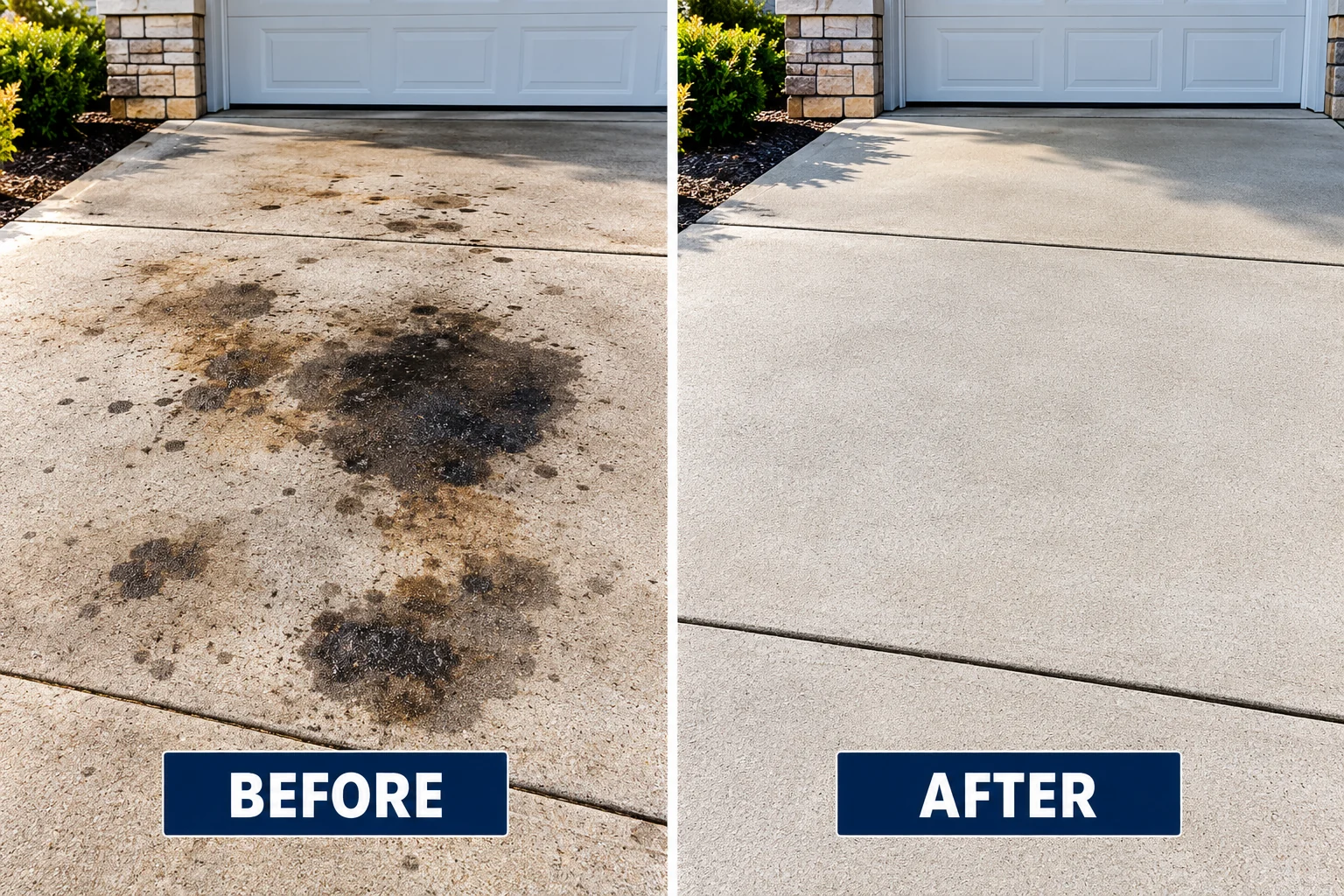
Concrete contains tiny pores. Liquid oil can enter those pores and spread below the surface. As a result, removing the visible film may leave a dark mark behind.
Repeated leaks add more oil to the same spot. Grease can also trap dirt and form a stubborn layer. Stain age, spill size, and surface condition all affect the result.
Fresh Spills vs. Old Stains
Fresh spills may be easier to manage before they spread. Older stains often need more work. Still, age alone does not predict the outcome. A test area helps show how the surface responds.
Is Every Dark Spot Oil?
No. Tire marks, damp patches, organic growth, and old coatings can also look dark. First, we check the likely cause. Then, we choose a treatment that suits the stain.
Common Oil Stain Removal Projects
Driveways and Parking Spaces
Vehicle leaks leave spots beneath parked cars. Treatment targets the stains and nearby surface grime.
Drive-Thrus and Service Lanes
Repeated traffic can leave oily films and dark deposits. Cleaning plans account for access and operating hours.
Dumpster Pads and Delivery Areas
Food grease and spills can build up around containers. Removing the source helps limit repeat staining.
Patios and Grill Areas
Cooking oil and grease can stain concrete or pavers. The treatment must suit the surface and any sealer.
Loading areas, fleet parking, and exterior equipment pads may also need treatment. Tell us what caused the spill, if you know. This helps us plan the assessment.
How Professional Oil Stain Removal Works
The best starting point is a surface check. We consider the material, stain depth, and nearby drains. Next, we discuss the treatment and likely limits.
Inspect and Test
Check the surface and existing finish. Test a small area before treating a larger section.
Remove Loose Residue
Address free oil and loose debris first. Avoid spreading the spill across clean areas.
Treat and Clean
Use a compatible degreaser for surface buildup. Follow its label for application, brushing, and rinsing.
Review Deeper Stains
Let the surface dry before judging the result. Remaining marks may need a separate spot treatment.
When Can a Poultice Help?
A poultice is a specialty treatment for some porous surfaces. Certain products draw embedded oil into an absorbent material as they dry. Product directions determine how to apply and remove them.
This method may help when surface degreasing leaves a stain. However, it is not suitable for every finish. Deep marks may need repeat treatment or remain partly visible.
Where Does Pressure Washing Fit?
Pressure washing can help remove loosened grime on suitable concrete. It does not guarantee deep oil removal. Excessive pressure can damage the surface, so the method must match its condition.
Hot water may help with greasy buildup when the surface and equipment allow it. Heat is one part of a plan, rather than a cure for every stain.
Different Surfaces Need Different Care
Plain Concrete
Sound concrete may tolerate a suitable cleaning process. Weak or damaged areas need extra care. Cleaning cannot repair cracks, scaling, or old etching.
Pavers and Natural Stone
Pavers and stone vary in porosity and finish. Cleaners must suit the material. Rinsing also needs care around joints and bedding sand.
Sealed or Decorative Concrete
A cleaner may affect an existing sealer or colored finish. Therefore, we check compatibility and test first. Some stains may sit beneath a coating.
Asphalt
Asphalt needs a separate approach. Products for concrete may be unsuitable. Oil can also damage asphalt, so cleaning alone may not resolve the problem.
Why Runoff Planning Matters
Wash water can carry oil, grease, and cleaning residue. For this reason, we assess drainage before washing. A cleaning plan should keep contaminated runoff out of storm drains and waterways.
The site may need containment and collection. Disposal arrangements depend on the waste and local requirements. Never assume a nearby drain is an approved disposal point.
What Results Can Oil Stain Removal Achieve?
Treatment can reduce dark stains and remove greasy films. Yet the final look depends on how far the oil has spread. The surface’s age and previous cleaning also matter.
A faint shadow may remain after treatment. Wet concrete can hide or change the look of a stain. Therefore, we review the surface after it dries.
Clean does not always mean stain-free. Removing surface grease and removing every trace of discoloration are different goals. We discuss those limits before work begins.
For busy commercial sites, removing greasy buildup can improve traction. However, cleaning does not guarantee a slip-proof surface. Keep traffic away during treatment and follow reopening instructions.
How to Reduce Future Oil and Grease Stains
- Repair vehicle and equipment leaks promptly.
- Use drip trays where leaks may occur.
- Place a suitable mat beneath outdoor cooking areas.
- Address spills before they spread.
- Keep grease containers closed and maintained.
- Schedule cleaning around the site’s actual use.
A compatible oil-resistant sealer may make future cleanup easier. However, sealers vary and do not make concrete stain-proof. First, resolve existing contamination and check product suitability.
Oil Stain Removal in Columbus and Central Ohio
Ohio Power Washing can assess stained exterior surfaces and discuss a suitable cleaning plan. We help you understand the scope and realistic results.
Send close-up photos and a wider view of the area. Include the surface type, stain age, and spill source if known. Also mention any sealer, coating, or previous treatment.
Request Your Stain Treatment EstimateOil and Grease Treatment Questions
Can old oil stains be removed from concrete?
They can often be reduced. Deep oil may leave a shadow, even after treatment. A test area helps set expectations.
Will pressure washing alone remove oil?
Not always. Washing may remove surface grime while oil stays inside the pores. A degreaser or specialty spot treatment may be needed.
Can you treat cooking grease and vehicle oil?
Both may be treatable, but the method can differ. The surface, spill source, and stain depth guide the plan.
Should I use acid to remove oil stains?
Do not assume an acid cleaner is suitable for oil. It may damage concrete or nearby finishes. Use a material-compatible treatment designed for the stain.
How much does oil stain removal cost?
Price depends on the area, access, surface, and treatment needed. Runoff handling and repeat spot treatments may also affect the quote.
Start With a Plan for Your Stained Surface
Contact Ohio Power Washing about oil and grease stain treatment. We will discuss the surface, likely improvement, and next steps.
Request an Oil Stain Assessment