

Hard Water Stain Removal:
A Guide to Mineral Deposits
Hard water stain removal targets cloudy spots and stubborn mineral film. Learn why deposits form, how surface-specific treatment works, and what cleaning can realistically achieve.
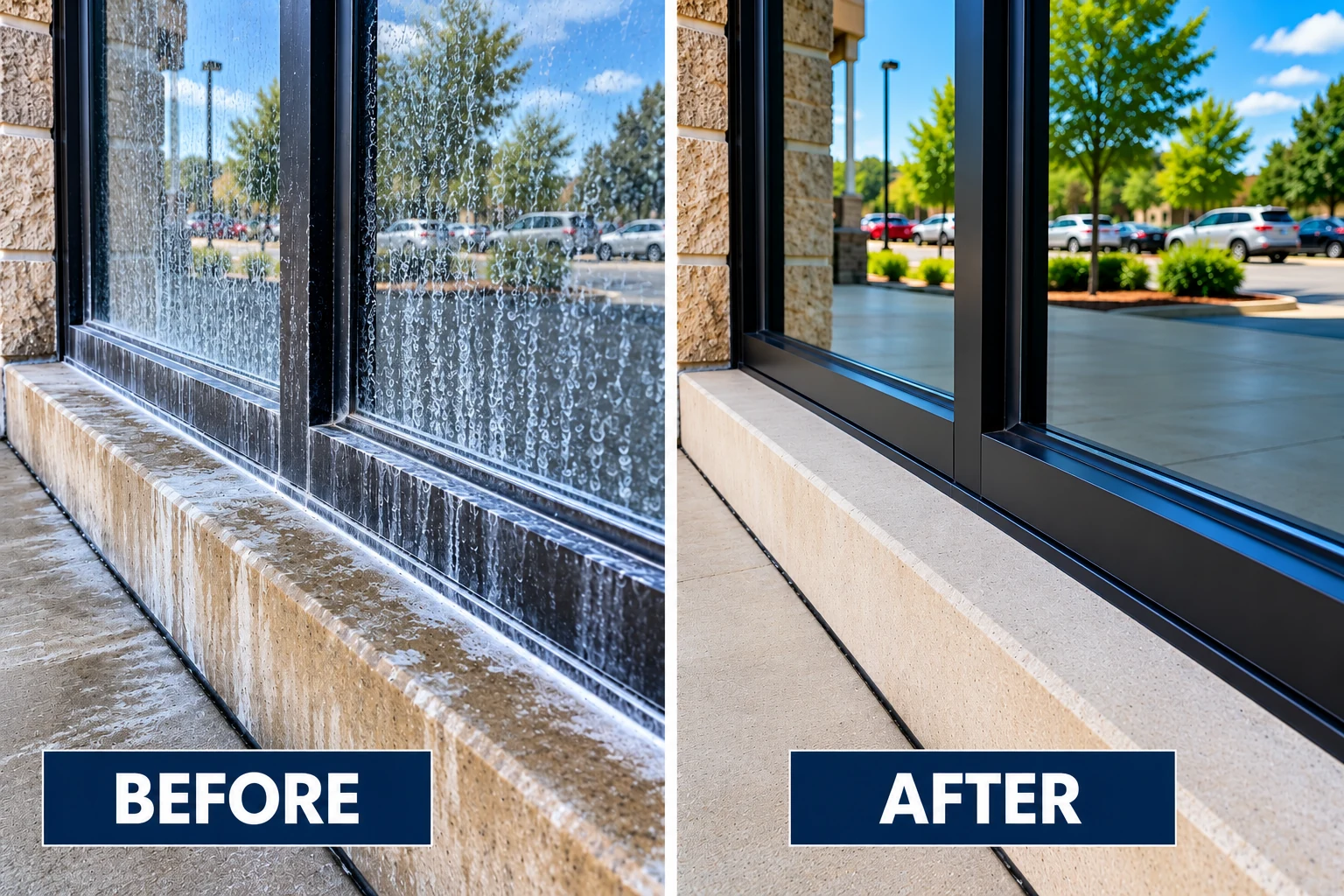
Request a Mineral Deposit AssessmentHard water stain removal addresses the mineral residue left when water dries. It can appear as white spots, cloudy film, or crusty buildup. Repeated wetting often makes the deposits more noticeable.
Windows, masonry, and siding need different care. A cleaner that suits one surface may damage another. Therefore, the first step is to identify the deposit and material.
Deposits and damage are different. Cleaning may remove buildup sitting on a surface. It cannot always reverse etching or restore a damaged finish.
What Causes Hard Water Stains?
Hard water contains dissolved minerals, commonly calcium and magnesium. When the water evaporates, some residue can remain. Each new wetting cycle may add another layer.
Sprinklers are a common source of repeated spots on exterior glass. Leaks and runoff can also leave deposits on nearby walls. However, not every white mark comes from hard water.
Common Signs of Mineral Buildup
- White rings where droplets dried.
- Cloudy patches on exterior windows.
- Chalky streaks along repeated runoff paths.
- Crusty deposits near irrigation spray.
- Marks that remain after routine washing.
These signs guide an inspection. They do not identify the exact mineral by themselves. A small test area helps confirm a suitable cleaning approach.
Mineral Deposits, Rust, and Efflorescence
Hard Water Deposits
Minerals remain after water dries on the surface. Repeated spray can create spots and film.
Rust Staining
Iron-related deposits often appear orange or brown. They may need a different stain treatment.
Efflorescence
Moisture moves soluble salts through porous masonry. The salts remain as water evaporates.
Surface Etching
The finish itself has changed or become damaged. Removing deposits may reveal damage beneath them.
A surface may have more than one condition. For this reason, we avoid treating every white or cloudy mark the same way.
Where Hard Water Stain Removal Is Needed
Storefront and Exterior Windows
Irrigation overspray can leave cloudy glass near sidewalks and landscaping. Runoff from nearby materials may add other deposits. Glass coatings, films, frames, and seals all need consideration.
Brick, Concrete, and Pavers
Repeated wetting can leave visible mineral buildup. The cleaner must suit the masonry and its condition. Nearby glass and metal may need protection from a masonry treatment.
Siding and Painted Trim
Sprinkler spray and leaks can mark exterior finishes. However, siding oxidation and faded paint may look similar. Testing helps separate removable residue from permanent change.
Pool Surrounds and Outdoor Features
Water splash can leave deposits on suitable exterior surfaces. Pool materials and coatings vary. Each area needs a compatibility check before treatment.
How Professional Hard Water Stain Removal Works
A careful process aims to lift deposits while preserving the surface. We consider the source, material, and nearby finishes before discussing treatment.
Inspect the Deposit
Review the surface and repeated water exposure. Check for coatings, damage, and other stains.
Test a Small Area
Use a discreet section to check compatibility. Review the dry appearance before wider cleaning.
Apply Suitable Treatment
Choose a surface-specific cleaner or method. Follow product directions for contact time and handling.
Rinse and Review
Remove treatment residue as directed. Check the dry result and discuss any remaining marks.
Why Routine Washing May Fall Short
A routine wash can remove dirt while mineral buildup remains. More pressure may not solve the problem. Instead, the deposit may need a compatible specialty treatment.
Why Product Compatibility Matters
Some masonry deposit removers can etch glass or harm metal and paint. Never assume a product labeled “hard water remover” suits every surface. The label and material guidance control its use.
Acid-sensitive stone needs extra care. Marble, limestone, and travertine can be damaged by acidic cleaners. Vinegar is also acidic. Avoid untested household remedies and aggressive scrubbing.
Can Cloudy Glass Always Be Made Clear?
Removing surface deposits can improve clarity. However, glass may also have permanent etching, scratches, or coating damage. A cleaning test helps show the likely improvement.
Cloudiness between panes is a separate issue. Exterior washing cannot remove moisture trapped inside a sealed glass unit. Ask a window professional to assess that condition.
When Restoration May Be Needed
Etched glass may need specialist restoration or replacement. That is different from routine deposit removal. We discuss cleaning limits rather than promise perfect clarity.
How to Reduce Returning Mineral Deposits
- Adjust sprinklers so they avoid windows and walls.
- Repair leaks that repeatedly wet the same area.
- Check gutters and runoff paths during rain.
- Follow surface-specific maintenance guidance.
- Address new buildup before it becomes extensive.
- Tell your cleaner about glass films and coatings.
A suitable purified-water window rinse can reduce spots from that cleaning rinse. It does not stop later sprinkler exposure or reverse existing damage.
Finally, address the water source. Without that step, clean surfaces may collect deposits again.
What Results Should You Expect?
Treatment can reduce mineral film and improve appearance. Yet heavy buildup may need more than one pass. Permanent marks may remain after the deposits are gone.
We review the test area and explain the likely result. Surface protection and realistic expectations matter more than chasing a stain with excessive force.
Hard Water Stain Removal in Columbus and Central Ohio
Ohio Power Washing can assess mineral-stained exterior surfaces and discuss suitable cleaning. Send close-up photos and a wider view of the affected area.
Include the surface type and likely water source. Also mention coatings, prior treatments, and how long the marks have been present. These details help define the next step.
Request Your Specialty Cleaning EstimateHard Water and Mineral Deposit Questions
Will pressure washing remove hard water stains?
Not always. Pressure may remove dirt while mineral deposits remain. A compatible specialty treatment may be needed.
Can the same cleaner treat glass and concrete?
Do not assume so. Some masonry cleaners damage glass and nearby finishes. Each material needs a compatibility check.
Are white marks on brick always hard water stains?
No. Efflorescence, construction residue, and other deposits can look similar. Assessment helps determine the right method.
Will the stains return after treatment?
They can if repeated water exposure continues. Correcting sprinkler spray or leaks helps reduce new buildup.
How much does hard water stain removal cost?
Price depends on area, access, surface, and deposit severity. Testing and any separate restoration needs also affect the scope.
Give Mineral Buildup the Right Treatment
Contact Ohio Power Washing about hard water stain removal. We will discuss the surface, likely improvement, and realistic cleaning options.
Request a Mineral Deposit Assessment