

Graffiti Removal:
A Guide to Cleaning Exterior Surfaces
Spray paint or marker on your property? Learn how graffiti removal works, why the surface matters, and what to expect before cleaning begins.
Request a Graffiti Removal AssessmentGraffiti removal starts with two questions: what left the mark, and what is underneath it? A method that suits a concrete wall may damage painted siding or soft brick.
This guide helps Columbus and Central Ohio property owners understand the options. It explains common surfaces, the cleaning process, and ways to prepare for an assessment.
The goal: Remove the unwanted material while preserving the original surface. More pressure is not always a better solution.
Why Different Graffiti Needs Different Treatment
Graffiti can include spray paint, permanent marker, or other surface-applied materials. The type of material affects the cleaning method. So does the amount of time it has been on the property.
Spray Paint
Paint can cling to smooth finishes or enter the pores of masonry. Its coating type and thickness help guide treatment.
Marker and Ink
Ink may spread or leave a shadow if the wrong method is used. A small test checks both removal and surface compatibility.
Multiple Paint Layers
Repeated tagging can leave overlapping coatings. Removal may need more than one controlled treatment.
Scratched or Carved Marks
Cleaning cannot replace material removed by scratching or carving. These marks may require a repair specialist.
Before cleaning, take clear photos. Include a close-up and a wider view. This records the condition and helps show the size of the affected area.
Graffiti Removal on Common Exterior Surfaces
Brick and Mortar
Porous brick can absorb paint, while mortar joints may be weaker than the surrounding units. The method must account for both. Old or historic brick deserves special care and may need a conservation specialist.
Concrete and Masonry Block
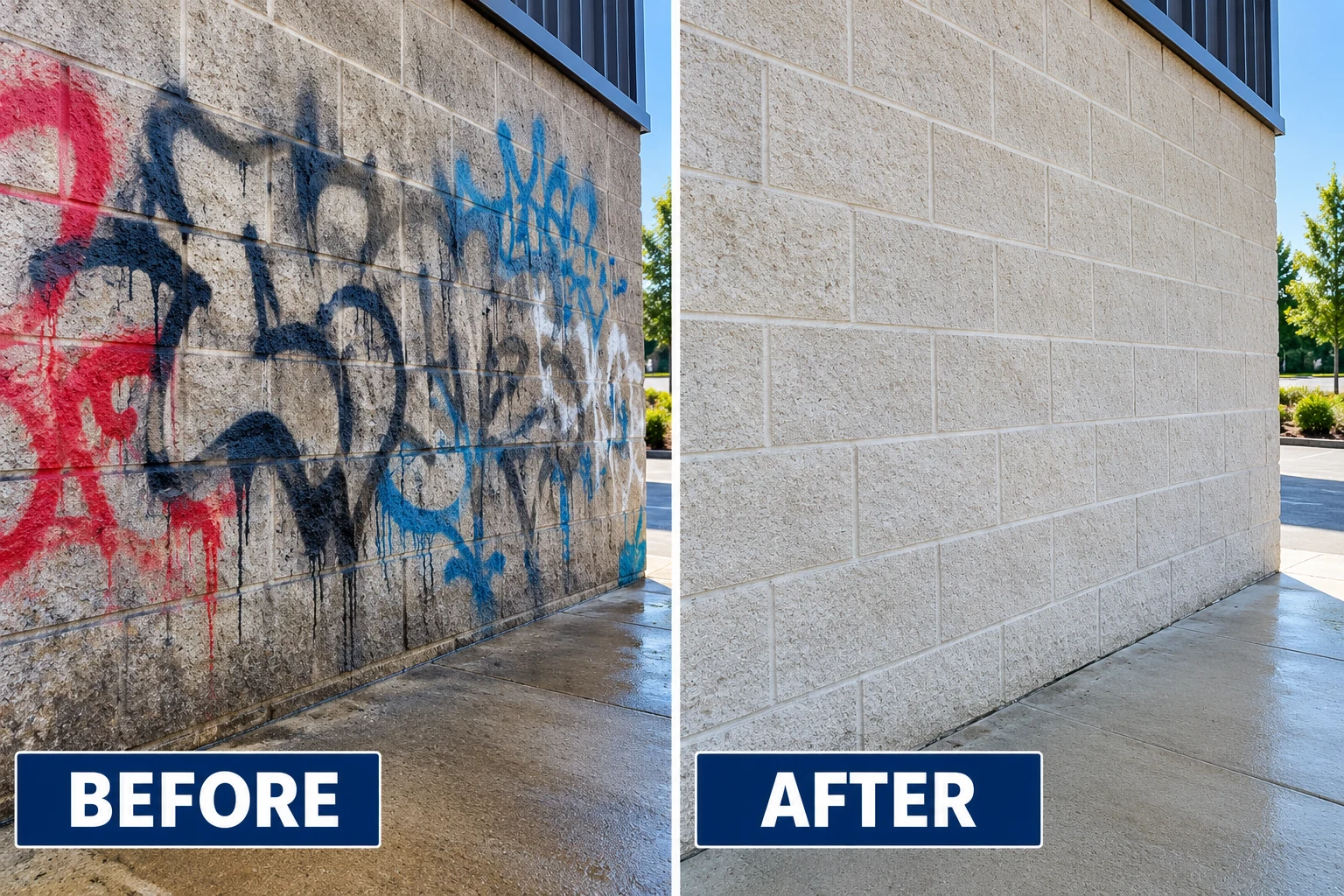
Concrete walls, retaining walls, and block buildings can hold pigment below the surface. A compatible remover may help release paint. However, some shadowing can remain after cleaning.
Natural Stone
Stone varies in hardness, porosity, and chemical sensitivity. Identify the stone before selecting a treatment. An approach suitable for one stone can damage another.
Painted Walls and Siding
A remover may lift the unwanted paint and the original finish together. Testing is essential. In some cases, preparing and repainting the affected area is a more practical option.
Metal Doors and Fixtures
Painted and powder-coated metal need attention to the finish beneath the graffiti. A solvent that removes a tag can also soften or dull that coating.
Glass and Storefront Windows
Glass may have films, coatings, or nearby seals that need protection. Do not assume a cleaner or scraper is suitable. Existing scratches will remain after surface paint is removed.
How Professional Graffiti Removal Works
A careful plan begins with assessment and testing. The product, contact time, water temperature, and rinse pressure should suit the material and follow manufacturer directions.
Inspect and Document
Identify the graffiti, surface, existing finish, and visible damage. Review access and nearby materials.
Test a Discreet Area
Check a small area before larger treatment. Compare removal, color, and texture after drying.
Treat the Graffiti
Use a compatible method to loosen or lift the material. Work in controlled sections to limit spreading.
Clean Up and Review
Complete the required rinsing and residue cleanup. Review the dry surface and explain any remaining marks.
Where Does Pressure Washing Fit?
Controlled washing can support removal when the surface allows it. Heat or other methods may also be appropriate. Still, equipment settings are part of the plan, not a substitute for it.
Avoid blasting the wall. Excessive pressure can erode mortar, scar masonry, or strip a finish. Start with the least aggressive effective approach and review the test result.
Protecting the Surrounding Area
Cleaning also involves nearby windows, landscaping, pedestrian access, and runoff. Paint residue and cleaning solution need appropriate containment and handling for the location. They should not simply be washed into a storm drain.
Will Every Trace of Graffiti Disappear?
Complete removal is not always possible. Porous surfaces can retain pigment, leaving a faint outline called ghosting. Previous cleaning attempts may also have changed the surface.
A test area helps set realistic expectations. If further treatment risks damaging the material, stopping may be the better choice. Repainting or specialist restoration may be worth discussing.
Does Prompt Removal Help?
Arrange an assessment soon after you notice the damage. Prompt attention can reduce the time graffiti remains visible. However, avoid a rushed experiment with an unsuitable cleaner.
Can Anti-Graffiti Protection Make Future Cleaning Easier?
Compatible protective treatments can make later removal easier. However, they do not stop someone from marking the property, and they are not suitable for every surface.
Sacrificial Protection
The protective layer is removed during graffiti cleanup. It generally needs to be reapplied afterward.
Non-Sacrificial Protection
The treatment is designed to remain through compatible cleaning cycles. Maintenance must follow the system’s directions.
Test protection before wider application. Check its effect on appearance and confirm compatibility with the material. For historic masonry, seek specialist guidance.
Also review lighting, visibility, and routine property inspections. Keeping a record of repeat incidents helps plan future maintenance.
Graffiti Removal Services in Columbus and Central Ohio
Graffiti on a storefront, community wall, or residential property deserves a clear plan. Contact Ohio Power Washing to discuss whether exterior cleaning is suitable for your project.
Send photos and tell us the surface material, approximate size, and when the mark appeared. Include any known paint, sealer, or anti-graffiti treatment. Also mention any removal attempts already made.
For commercial properties, share access restrictions and busy hours. This helps us discuss how the work could fit around residents, staff, and customers.
Request Your Graffiti Removal EstimateGraffiti Removal Questions
Can graffiti be removed from brick?
Often, but the paint and brick condition affect the result. Porous brick may retain a shadow. Testing helps establish a suitable method and realistic expectations.
Will pressure washing alone remove spray paint?
Sometimes it removes loose material, but paint may require a compatible specialty treatment. Increasing pressure can damage the surface.
Can graffiti be cleaned from a painted wall?
It depends on the graffiti and the original coating. A remover can affect both. A test may show that repainting is the more practical option.
What is graffiti ghosting?
Ghosting is a remaining shadow or outline after surface material is removed. Pigment held in porous masonry can cause it. Additional treatment may help, but complete removal is not guaranteed.
Does an anti-graffiti coating prevent vandalism?
No. It may make later cleaning easier, but it does not prevent tagging. Choose protection that suits the surface and follow its maintenance instructions.
How much does graffiti removal cost?
Cost depends on the material, affected area, coating type, access, and treatment required. Send photos for a property-specific assessment.
A Cleaner Exterior Starts With the Right Plan
Contact Ohio Power Washing to discuss graffiti on your property. Get guidance on the surface, treatment options, and next steps.
Request a Graffiti Removal Estimate