

Environmental Fallout Removal:
Cleaning Stubborn Film From Siding
Environmental fallout removal targets stubborn film left by airborne dirt and pollution. Learn why some siding stays dingy after washing and how specialty cleaning can improve its appearance.
Request a Siding Cleaning AssessmentEnvironmental fallout removal addresses the stubborn deposits that can leave siding gray, brown, or dull. Homes near busy roads and industrial areas may collect airborne dust and residue. Some of this film needs more than a routine house wash.
Ohio Power Washing assesses the surface before choosing a treatment. The goal is to remove suitable buildup and reveal a cleaner finish. Cleaning cannot reverse every sign of fading or surface damage.
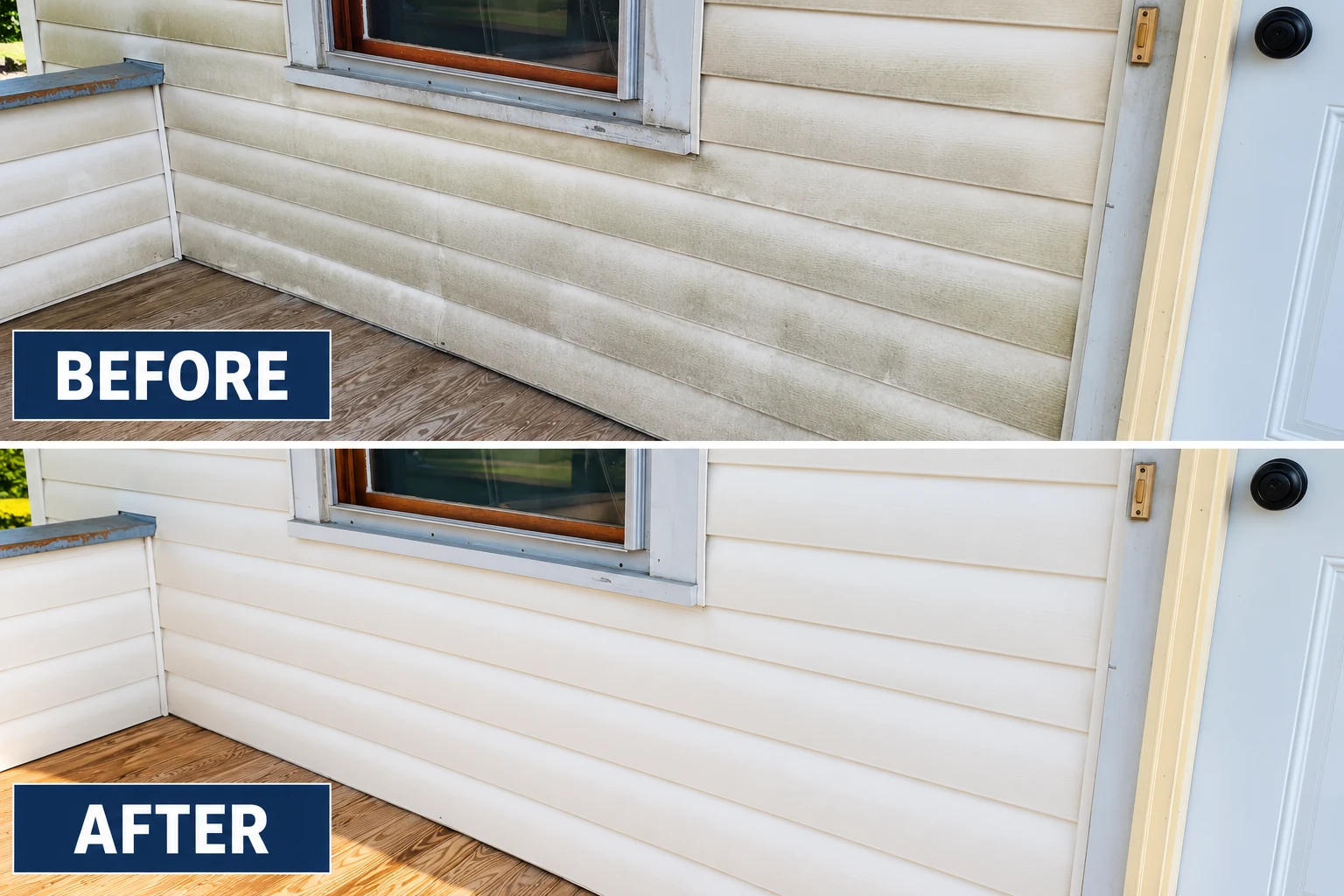
What Is Environmental Fallout on Siding?
In exterior cleaning, environmental fallout describes airborne deposits that settle on a building. The term covers several types of buildup. It does not identify a specific chemical or pollution source.
- Road dust and fine dirt carried by traffic.
- Soot and other particles from combustion.
- Oily residue that traps dust on the surface.
- Windblown dust near industrial activity.
- Mixed deposits that collect beneath siding edges.
Rain may rinse away loose dirt. However, sheltered areas can hold deposits longer. Repeated exposure can leave a stubborn film across the wall.
Does a Nearby Factory Prove the Cause?
No. A property’s location provides useful context, but appearance alone cannot identify the source. Dust, organic growth, and surface aging may occur together. Suspected hazardous deposits need a separate assessment before cleaning.
Signs Your Siding Needs Specialty Cleaning
Look for a dull film that remains after routine washing. You may also notice dark bands beneath panel edges. Walls facing traffic may look different from sheltered walls.
These clues help guide an inspection. They do not prove the material is industrial pollution. A small test area helps show what can be removed.
Still dirty after a house wash? The remaining film may need a different cleaner. Increasing water pressure can damage siding without solving the stain.
Fallout, Algae, and Oxidation Are Different
Environmental Film
Deposits sit on the surface and may trap more dirt. Stubborn oily or soot-like residue can need specialty treatment.
Algae and Organic Growth
Growth often appears in damp or shaded areas. A suitable soft wash may address it without removing every other deposit.
Siding Oxidation
Weathered siding can develop a chalky film. Oxidation treatment requires its own surface check and cleaning plan.
Permanent Fading
Sun exposure may change the siding’s color. Removing dirt cannot replace lost pigment or repair damaged panels.
A wall can have more than one condition. Therefore, the cleaning plan may need several steps.
Why Routine Washing May Leave the Film Behind
Routine soft washing often targets organic growth and general grime. That approach may leave stubborn traffic film or other deposits. Water alone may also fail to lift oily residue.
Soft washing describes a low-pressure approach. The cleaner still needs to match the deposit. Specialty environmental fallout removal can also use gentle application and rinsing.
For this reason, the answer is often a different treatment rather than more force. The product, contact time, and method must suit the siding.
Our Environmental Fallout Removal Process
Inspect the Surface
Identify the siding and any coating. Check for chalking, loose panels, damaged seals, and previous cleaning marks.
Test a Small Area
Choose a discreet spot to check compatibility. Review the dry result before treating the full wall.
Apply a Suitable Cleaner
Use a specialty cleaner matched to the buildup. Follow its label for dilution and contact time.
Rinse and Review
Use controlled rinsing and check the finish once dry. Address remaining buildup only where further treatment is suitable.
Does the Process Require Brushing?
Sometimes. Gentle agitation may help lift stubborn residue. Other products work without brushing under suitable conditions. The test area and product directions guide this choice.
Why Work in Small Sections?
Small sections help control contact time. They also make rinsing easier. Hot siding and direct sun can cause cleaners to dry too quickly, so conditions matter.
Protect the finish. Abrasive pads, unsuitable solvents, and excessive pressure can harm siding. We follow material guidance and avoid forcing water into joints or openings.
Different Siding Materials Need Different Care
Vinyl Siding
Vinyl needs a compatible cleaner and gentle handling. Older panels may have chalking or fading beneath the dirt. Those conditions can limit the final appearance.
Painted Metal
Painted aluminum and steel need care around the coating. Thin paint, corrosion, and oxidation require a separate review. Cleaning cannot replace a failing finish.
Fiber Cement and Specialty Finishes
Painted fiber cement, stucco, and EIFS have their own care requirements. A cleaner suitable for vinyl may not suit them. Manufacturer guidance helps determine the approach.
Can Cleaning Renew the Siding’s Appearance?
Removing a dull surface film can reveal a brighter, more even finish. This can improve the appearance without repainting when the underlying surface is sound.
However, permanent fading, scratches, and damaged coatings may remain. A test area helps us explain the likely improvement before work begins.
Will the Film Return?
It can. Cleaning removes existing buildup but does not stop nearby traffic or airborne dust. A maintenance plan should reflect the property’s exposure.
How to Limit Future Buildup
- Inspect road-facing walls for new film.
- Follow the siding manufacturer’s care instructions.
- Keep gutters working to reduce dirty runoff.
- Report any known industrial deposit before scheduling.
- Avoid repeated scrubbing with household solvents.
- Plan cleaning around actual buildup rather than a fixed promise.
Cleaning also needs care around plants and nearby finishes. Runoff planning should account for the residue and cleaner. Unusual or hazardous deposits may need specialist handling.
Environmental Fallout Removal in Columbus and Central Ohio
Does your siding still look dingy after washing? Ohio Power Washing can assess the film and discuss a suitable treatment.
Send close-up photos and a wider view of each affected wall. Tell us the siding type, previous treatments, and any nearby traffic or industrial activity. Also mention known coatings or peeling paint.
Request Your Specialty Siding EstimateEnvironmental Fallout Removal Questions
Will a normal house wash remove environmental fallout?
Some loose deposits may wash away. Stubborn film can need a specialty cleaner and a separate process. A test area helps determine the right approach.
Is every gray film caused by a factory?
No. Traffic dust, organic growth, and weathering can look similar. Location alone cannot identify the source of a deposit.
Can you clean the film with low pressure?
Often, a suitable cleaner allows gentle application and rinsing. Some deposits also need careful brushing. The surface and test results guide the method.
Will cleaning restore the original color?
Removing film may reveal a brighter finish. It cannot reverse permanent fading or replace damaged paint. Results depend on the siding’s condition.
How much does specialty siding cleaning cost?
Price depends on wall area, height, access, and the treatment needed. Surface condition and any special runoff handling also affect the scope.
Give Stubborn Siding Film the Right Treatment
Start with an assessment from Ohio Power Washing. We will discuss the buildup, surface condition, and realistic cleaning options.
Request a Siding Cleaning Assessment