

Battery Acid Stain Removal:
Understanding Concrete Discoloration
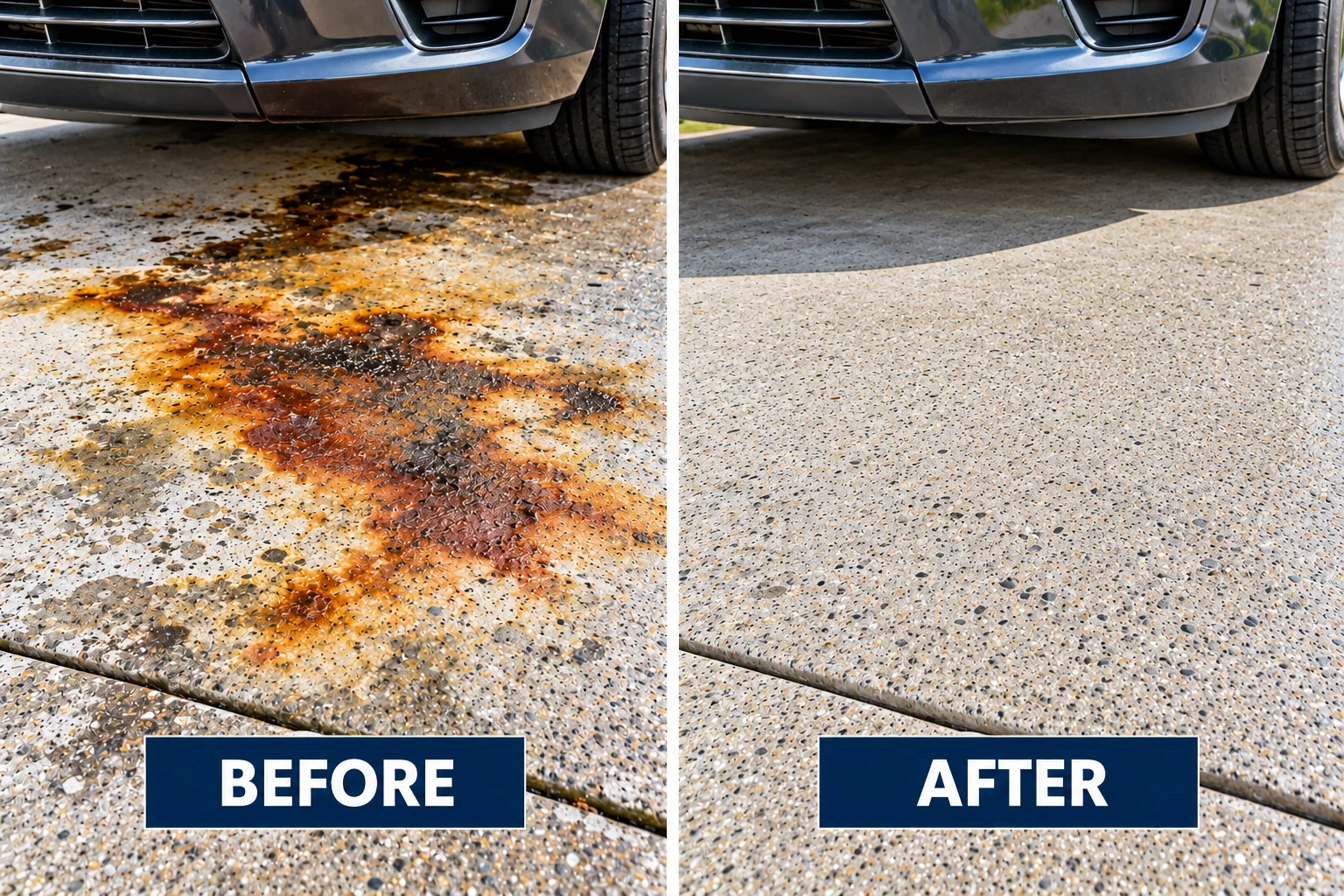
Battery acid stain removal can improve some stubborn marks on concrete. Learn how stain treatment differs from spill cleanup and why acid damage may remain after cleaning.
Request a Concrete Stain AssessmentBattery acid stain removal focuses on discoloration left after a battery-related spill. Some orange or brown marks may respond to specialty treatment. However, acid can also damage the concrete itself.
The first step is to understand what happened. A dry-looking stain does not prove that the area is safe. Any remaining spill or contaminated material needs proper handling before cosmetic treatment.
An active leak is a separate problem. Keep people and pets away from leaking batteries and unknown residue. Contact the battery supplier or a qualified spill-response professional. Do not pressure wash the material into drains or soil.
How Battery Leaks Can Stain Concrete
Flooded lead-acid batteries contain sulfuric acid and water. A leak or spill can expose the surface beneath them to corrosive liquid. Equipment history helps identify the likely source.
Discoloration and physical damage are different outcomes. A surface may have one or both. Therefore, cleaning plans must consider more than the color of the mark.
Common Places to Find Battery-Related Marks
- Driveways where vehicles have leaked.
- Golf cart parking and storage areas.
- Exterior equipment pads.
- Fleet parking and service areas.
- Concrete near past battery storage locations.
Not all batteries use the same chemistry. Lithium battery damage and other battery leaks need their own assessment. Do not assume a lead-acid stain treatment suits every battery incident.
Is the Mark Really From Battery Acid?
Orange stains can also come from rust, fertilizer, or iron-rich water. White marks may have several causes. Appearance alone cannot confirm a battery spill.
Tell your cleaner what equipment was present and when the leak occurred. Also share any previous spill cleanup or treatment. That information helps guide the next step.
Removable Discoloration
Some stains respond to a compatible specialty cleaner. A test area helps show the likely improvement.
Permanent Surface Damage
Etching, pitting, and lost concrete paste are physical changes. A stain remover cannot rebuild that material.
Stain Removal vs. Acid Damage Repair
Acid exposure can leave a rough, pale, or uneven patch. In severe cases, the surface may become weak. Removing discoloration does not repair that damage.
Some marks may improve while the texture remains different. Others may need repair or resurfacing. A concrete repair professional can assess those options.
Why a Test Area Matters
A small test helps separate cleaning potential from lasting damage. It also checks whether the product affects the existing finish. We review the dry result before recommending wider treatment.
How Battery Acid Stain Removal Is Planned
Cosmetic treatment comes after the spill and contamination have been properly addressed. Next, the cleaning plan must suit the surface and the remaining stain.
Review the Spill History
Identify the battery type and previous response. Confirm whether further specialist assessment is needed.
Inspect and Test
Check concrete condition, coatings, and access. Test a suitable treatment on a small section.
Treat Suitable Staining
Follow the product label and surface guidance. Protect nearby materials throughout the work.
Review the Dry Finish
Check improvement once the surface dries. Explain any remaining stain or repair needs.
Why Routine Pressure Washing May Not Work
Water pressure may remove dirt while discoloration remains. More force can harm already weakened concrete. Specialty stain treatment may be more appropriate where the surface allows it.
Does Neutralizing a Spill Remove the Stain?
Not necessarily. Spill control and stain treatment have different goals. Neutralization alone does not prove that all contamination has been removed. It also cannot reverse concrete damage.
Do not mix household products to experiment on the stain. The battery safety guidance and a qualified assessment should guide spill handling.
Different Surfaces Need Different Treatment
Plain Concrete
Sound concrete may suit specialty stain treatment. Acid-weakened areas need extra caution. Loose or damaged material may require repair before cleaning.
Brick and Concrete Pavers
Pavers and mortar joints can respond differently. Treatment must suit the paving material. Sand loss and existing surface damage also need attention.
Sealed and Decorative Concrete
A cleaner may affect sealers, color, or coatings. First, identify the finish and test compatibility. Some spills damage the coating as well as the surface below it.
Natural Stone and Other Materials
Stone and asphalt need separate assessments. A product designed for concrete may be unsuitable. Never assume one cleaner can safely treat every exterior material.
Why Waste and Runoff Handling Matter
Battery-related residue may contain more than acid. The type of battery and spill determine the concerns. Cleaning should not spread unknown material across the property.
A plan may need containment, collection, and specialist disposal. Those needs must be settled before washing. Cosmetic stain removal is not a substitute for hazardous spill response.
What Results Should You Expect?
Some orange or brown discoloration may become much less visible. Yet results depend on the stain and surface condition. Repeat treatment may be considered only where appropriate.
White marks, etched patches, and texture changes may remain. We explain those limits rather than promise a like-new slab. Let the area dry before judging the final appearance.
How to Reduce Future Battery Stains
- Have leaking batteries and damaged equipment serviced promptly.
- Follow the battery manufacturer’s handling instructions.
- Use suitable containment in designated storage areas.
- Inspect equipment parking areas for signs of leaks.
- Keep spill-response information available where batteries are handled.
- Address a new leak before scheduling cosmetic cleaning.
A surface coating is not a replacement for leak prevention. If you need chemical-resistant protection, discuss the exposure with a qualified coating professional.
Battery Acid Stain Removal in Columbus and Central Ohio
Ohio Power Washing can discuss assessment of remaining exterior stains after appropriate spill handling. We help you understand whether cleaning is suitable or repair may be needed.
Send photos and explain the battery type, spill date, and cleanup history. Include the surface material and any coating. Tell us if liquid or unknown residue is still present.
Request Your Concrete Stain AssessmentBattery Acid Stain Removal Questions
Can every battery acid stain be removed?
No. Some discoloration responds to treatment. Permanent etching, pale marks, and lost surface material may remain.
Is orange staining proof of a battery leak?
No. Rust, fertilizer, and irrigation deposits can look similar. Spill history and surface assessment help identify the likely cause.
Will pressure washing repair acid damage?
No. Pressure washing cannot rebuild damaged concrete. Excessive force may worsen a weak surface.
Can you treat a stain while the battery still leaks?
The leak and any remaining spill need proper handling first. Cosmetic treatment should wait until the source and contamination are addressed.
How much does battery acid stain removal cost?
Price depends on area, access, damage, and treatment needs. Spill response and concrete repairs are separate from cosmetic stain treatment.
Understand the Stain Before Treating It
Contact Ohio Power Washing to discuss battery-related concrete discoloration. We will review the surface, spill history, and appropriate next steps.
Request a Concrete Stain Assessment