

Wood Deck and Fence Reconditioning: A Complete Care Guide
Weathered wood needs more than a quick wash. Learn how cleaning, careful preparation, and the right finish work together to renew decks, fences, and other outdoor wood.
What Is Wood Reconditioning?
Wood deck and fence reconditioning prepares weathered outdoor wood for renewed use and suitable protection. It may include cleaning, finish removal, brightening, and targeted sanding.
The process depends on the wood and its current condition. Some surfaces only need maintenance cleaning. Others need more preparation before a new stain or protective finish can perform well.
At Ohio Power Washing, we review the material and existing coating first. Then we explain the work needed, the finish options, and the results you can realistically expect.
Why Decks and Fences Turn Gray
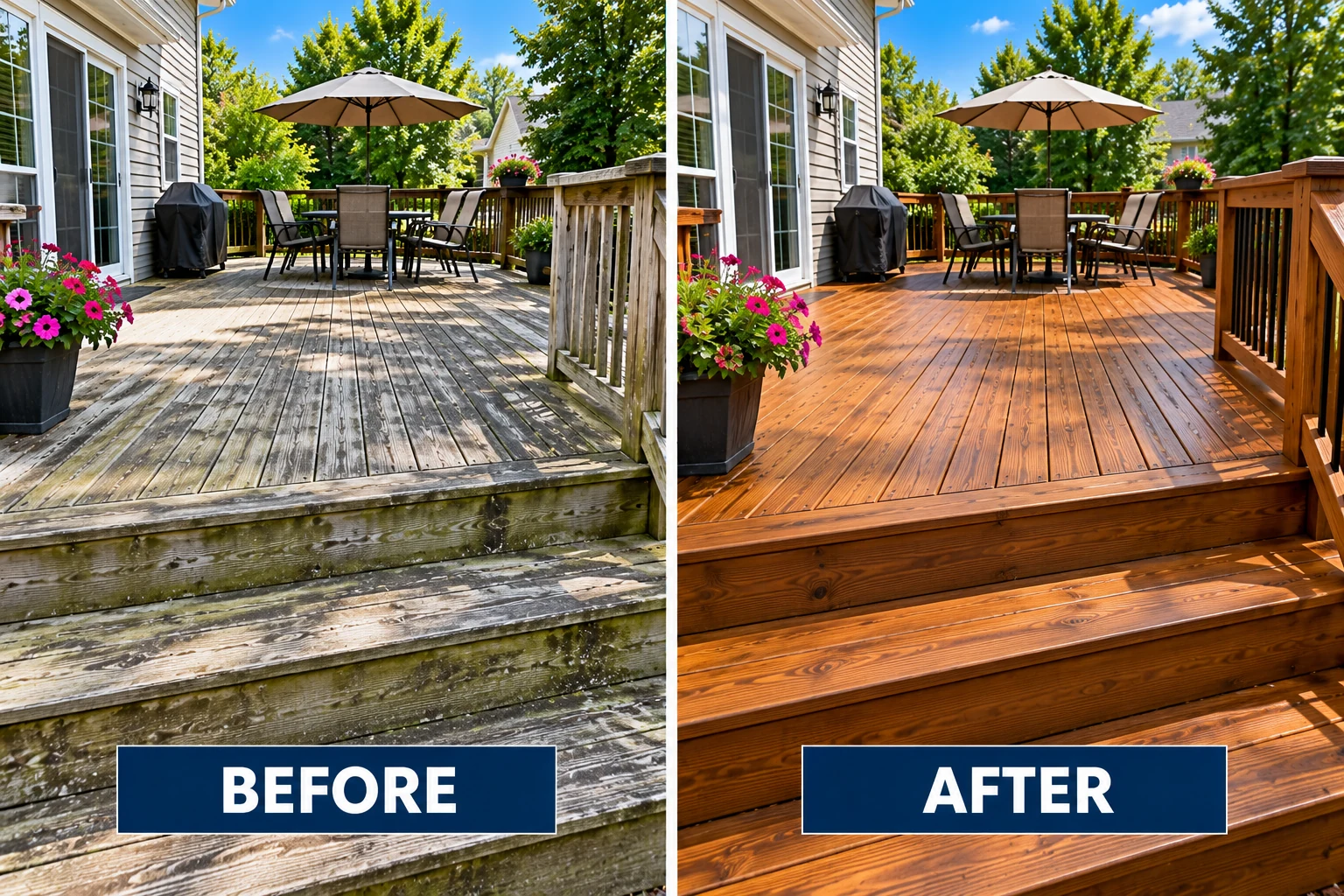
Sunlight changes the exposed wood surface over time. Rain, dew, and repeated wetting add to the weathering cycle. Dirt and organic growth can also darken damp areas.
A gray surface does not automatically mean the wood is rotten. Sound wood may respond well to cleaning and preparation. However, soft spots and structural problems need separate attention.
- Gray color: Often relates to weathering at the surface.
- Green or dark buildup: May involve algae, mildew-type growth, or grime.
- Peeling patches: Can indicate a failing coating.
- Rough fibers: May follow weathering or aggressive past washing.
- Dark marks near fasteners: May require stain-specific assessment.
These conditions need different solutions. Applying stain over them can leave uneven results.
Types of Wood We Can Assess for Reconditioning
Many exterior woods can be cleaned and refinished when they are sound. This list covers common deck and fence materials. Final suitability depends on condition, prior treatments, and product guidance.
Pressure-Treated Pine
Southern yellow pine and other treated softwoods are common in decks and fences. Treatment does not eliminate surface weathering. Moisture and finish compatibility still matter.
Cedar
Western red cedar and other exterior cedar products need gentle care. Aggressive washing can damage the soft fibers. We follow the wood supplier’s cleaning guidance.
Redwood
Redwood can develop weathering and uneven discoloration. Natural extractives also affect its appearance. Preparation and a sample help set expectations.
Cypress
Cypress appears in fencing and outdoor structures. Its age, surface condition, and previous finish guide the cleaning and recoating plan.
Ipe
Ipe is a dense tropical hardwood. It needs products suited to hardwood decking. Applying excess finish can leave residue when the wood cannot absorb it.
Cumaru and Garapa
These hardwoods have their own color and absorption characteristics. Cleaning and finishing should suit the actual species rather than a generic softwood routine.
Tigerwood and Massaranduba
Dense tropical decking needs careful preparation. A small finish sample helps show the effect on grain and color.
Mahogany, Meranti, and Teak
These names cover materials with different properties. Confirming the supplied species helps select a suitable cleaner and finish.
Douglas Fir, Spruce, and Hemlock
These woods may appear in porch boards, fencing, or outdoor structures. Soundness and suitability for the exposure must be checked before refinishing.
White Oak and Black Locust
Some projects use these hardwoods outdoors. Their condition, installation, and prior coating determine whether cleaning and refinishing are appropriate.
Modified Wood
Thermally modified wood and acetylated wood, such as Accoya, need supplier-specific care. Modification does not make every cleaning product or coating suitable.
Bamboo Decking and Fencing
Bamboo is a grass, rather than a wood species. Engineered outdoor boards and bamboo poles are different products. Each needs its own approved maintenance process.
Not Sure What Material You Have?
Share installation records, supplier details, or product labels if available. Composite decking, PVC, and wood-plastic products need separate care. Do not treat them as solid wood.
Extra Care for Ipe and Bamboo
Ipe and Other Dense Hardwoods
Dense hardwood may absorb less finish than softer wood. A compatible hardwood coating, careful application, and removal of excess product help avoid a sticky surface.
Cleaning and brightening can prepare suitable hardwood for recoating. However, the chosen system determines the steps. We do not apply one softwood process to every tropical species.
Engineered Bamboo and Bamboo Poles
Outdoor bamboo boards may be compressed, heat-treated, or factory-finished. The manufacturer determines the approved cleaner and maintenance coating.
Bamboo pole fencing has different construction and exposure concerns. We check its condition and product guidance before recommending work. An indoor bamboo product is not automatically suitable outdoors.
The Deck and Fence Reconditioning Process
Each stage has a purpose. We include the steps your surface needs rather than treating every job alike.
Review Condition and Scope
We check visible wear, wood type, existing finish, and access. The estimate identifies which deck areas or fence sides are included.
Protect and Prepare
Furniture and décor need to be cleared. We plan around landscaping, siding, metal fixtures, and nearby surfaces before treatment.
Clean or Remove Failed Finish
A suitable cleaner addresses buildup. A failing or incompatible coating may need stripping or another removal method. A test helps confirm the approach.
Brighten When Appropriate
A compatible brightener can help address discoloration and prepare the surface after certain cleaners or strippers. It is a separate step, not a replacement for cleaning.
Dry and Refine the Surface
The wood must meet the finish manufacturer’s moisture requirements. Targeted sanding may address raised fibers or rough areas where the system allows it.
Apply the Selected Finish
We follow the coating’s coverage, application, and weather requirements. The surface then needs its specified cure time before normal use.
Cleaning and stripping are not the same. A sound, compatible coating may only need maintenance preparation. Heavy paint or a thick failing film can require more extensive removal.
Gentle Washing Protects Wood Fibers
Excess pressure can gouge wood and leave lap marks. Some wood suppliers advise against pressure washing altogether. The material’s guidance determines the method.
Decks and Fences Have Different Needs
Deck boards take foot traffic and collect standing debris. Steps, rails, and shaded corners may weather at different rates. Horizontal surfaces often need closer maintenance attention.
Fences have vertical faces, posts, rails, and exposed end grain. Both sides may need treatment, but access and ownership boundaries can limit the scope.
We define those details before work starts. Gates, lattice, privacy screens, and handrails should also be included clearly in the estimate.
Choosing Stain, Oil, or Protective Finish
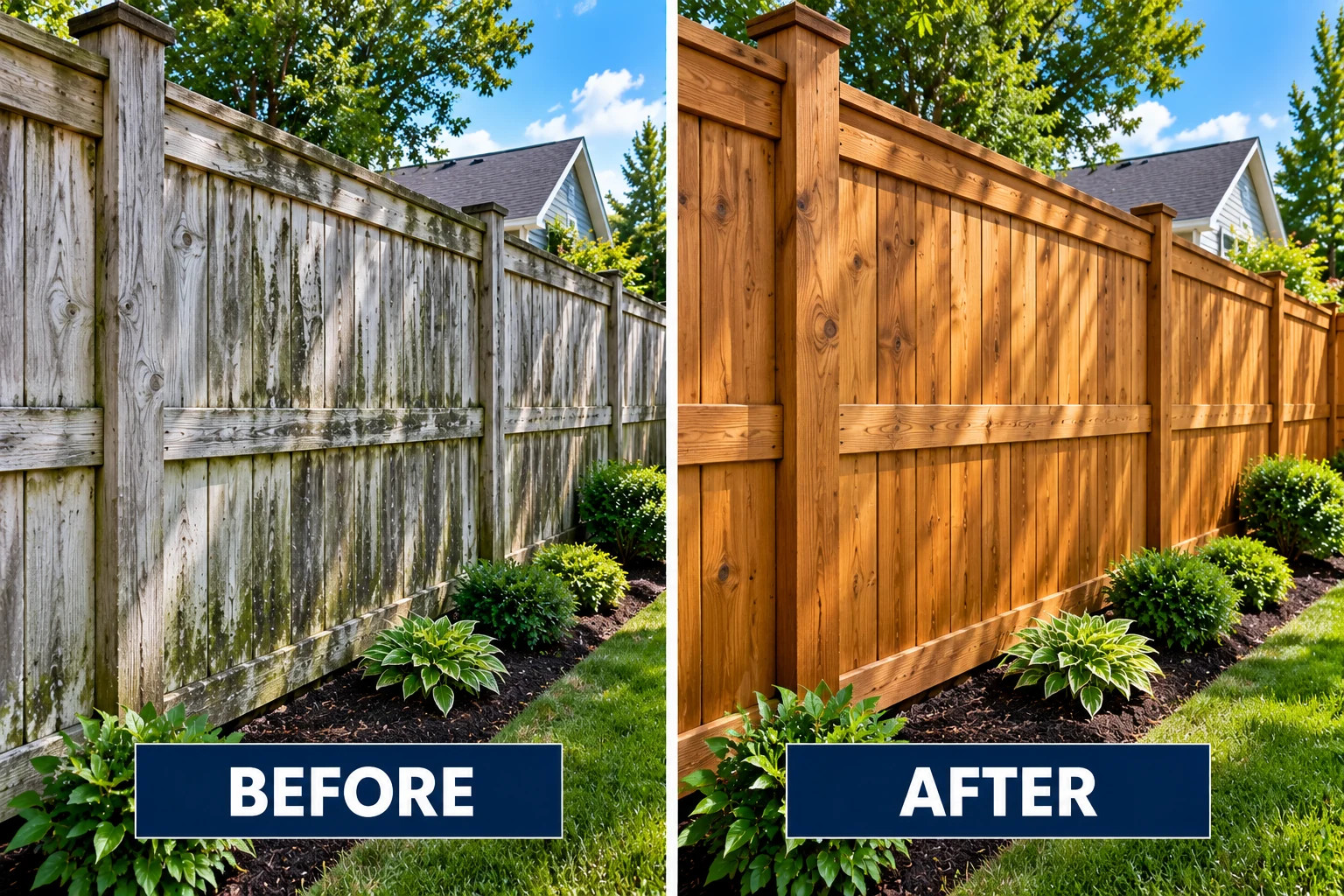
The right finish must suit the wood and how you use it. A fence-only coating may be unsuitable for a deck’s walking surface.
- Clear treatments: Keep a natural appearance. UV protection varies and may be limited without pigment.
- Transparent or semi-transparent stains: Show the grain while adding color. Compare samples on prepared wood.
- Semi-solid and solid-color stains: Provide more color coverage. Suitability and future preparation depend on the product.
- Hardwood oils and specialty coatings: Must be approved for the species or manufactured decking product.
Oil-based and water-based products each have specific requirements. The existing coating affects what can be used next. Switching products may require extra preparation.
Sealing does not make wood waterproof or stop all movement. Also, more coats are not always better. Follow the selected product rather than adding finish until the surface looks wet.
What Reconditioning Can and Cannot Fix
Good preparation can improve the appearance of sound wood. Still, old and replacement boards may absorb stain differently. Knots, checks, grain patterns, and past damage can remain visible.
Cleaning cannot restore strength to rotten boards. Loose posts, failing rails, and unsafe stairs need repair by a qualified professional before refinishing.
We also cannot promise that every deep stain will disappear. A test area and finish sample help you understand likely results.
Drying, Weather, and New Wood
There is no universal wait time after washing. Wood species, shade, humidity, and temperature affect drying. We use the finish’s moisture requirements rather than a fixed number of days.
New lumber can also require preparation before staining. Follow the wood and coating manufacturers’ instructions instead of assuming every new deck needs the same waiting period.
Central Ohio weather can change the schedule. Rain, cold temperatures, or heavy dew may delay application or curing. Keep people, pets, and furniture off treated surfaces until the product allows use.
Keeping Reconditioned Wood in Good Shape
- Remove leaves and debris from deck boards and gaps.
- Keep planters from holding moisture against the surface.
- Address drainage problems and persistent damp spots.
- Clean spills and grime with a compatible maintenance product.
- Check posts, rails, steps, and fasteners for developing problems.
- Review finish wear before water exposure and weathering become widespread.
Inspect regularly, but do not assume every surface needs annual stripping or recoating. The finish and exposure determine the maintenance plan.
Oil-soaked rags can create a fire hazard. Handle application materials exactly as the coating label directs.
Wood Reconditioning Questions
Can gray wood look better without replacement?
Often, if the wood is sound. Cleaning and preparation can improve weathered surfaces. Rotten or structurally damaged wood needs repair or replacement.
Do all decks need stripping?
No. A sound, compatible finish may only need cleaning and maintenance preparation. Peeling or incompatible coatings can require more extensive removal.
Can you clean ipe and bamboo?
Suitable exterior products can be assessed. Ipe needs hardwood-specific care, while bamboo needs its manufacturer’s instructions. Condition and previous treatments affect the recommended work.
Will brightening remove every stain?
No. Brighteners have a specific role in preparation. Deep stains and damaged wood may need separate attention, and some marks may remain.
How much does deck and fence reconditioning cost?
Size, material, coating condition, access, and preparation affect the estimate. Railings, steps, fence sides, and finish selection also influence the scope.
How do I prepare for the appointment?
Clear work areas and arrange access. Tell us about past coatings and repairs. Keep pets away, and read our day-of-service guide before the crew arrives.
See our deck reconditioning services or review the day-of-service preparation guide.
Renew Your Deck or Fence With a Clear Plan
Talk with Ohio Power Washing about wood deck and fence reconditioning. We will review your surface and explain suitable preparation and protection options.