
Residential Concrete Cleaning & Protection: A Guide for Your Whole Property
From the front walk to the backyard patio, concrete needs thoughtful care. Learn what cleaning removes and when optional sealing can help protect suitable surfaces.
Request a Concrete Cleaning EstimateWhy Residential Concrete Cleaning Matters
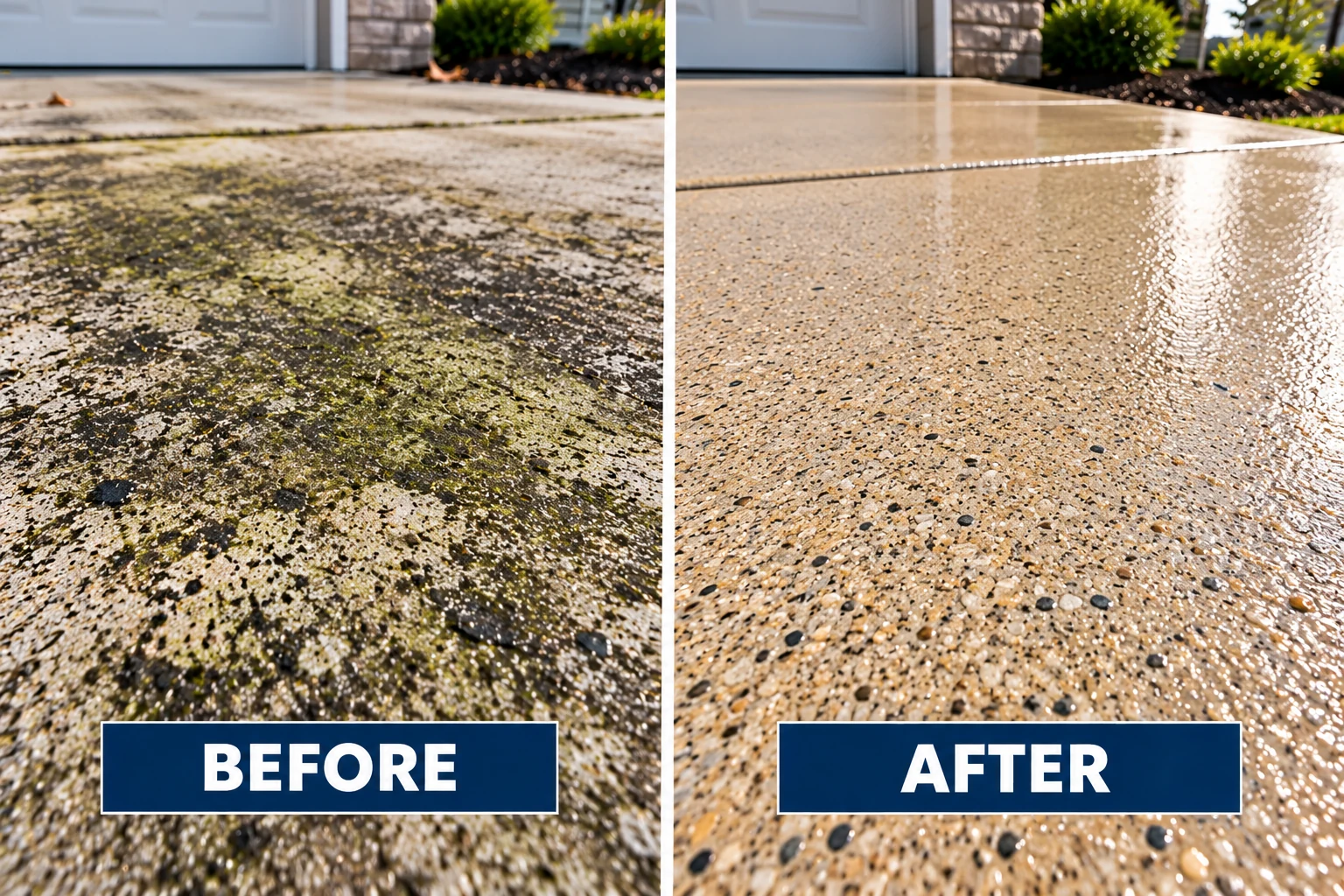
Residential concrete cleaning removes dirt, organic buildup, and residue from outdoor surfaces around your home. Optional protection treatments address a separate goal: helping suitable concrete resist certain exposures.
Concrete may look solid, but it has pores that can absorb water and spills. Meanwhile, leaves, foot traffic, vehicles, and nearby landscaping leave marks on the surface.
Cleaning helps refresh your property and remove slick organic deposits. However, wet concrete still requires careful footing. A clean surface also needs ongoing maintenance.
Concrete Surfaces Around Your Home
Think beyond the driveway. Cleaning nearby concrete areas together can create a more consistent look across your property.
Driveways and Parking Pads
Vehicles bring dirt, tire residue, and occasional oil leaks. These areas need controlled cleaning and a protection product suited to vehicle traffic.
Sidewalks and Front Walks
Busy paths collect soil and leaf stains. Shaded sections may develop organic growth. Wet traction matters when selecting any sealer.
Patios and Outdoor Dining Areas
Food spills, grill grease, and planters can leave marks. A suitable stain treatment may be needed before optional sealing.
Porches, Steps, and Landings
Entry areas need careful work around doors, rails, and adjacent finishes. Cleaning cannot correct loose steps or other structural problems.
Pool Decks
Splash water, sunscreen, and damp shade affect poolside concrete. Product compatibility and wet traction are especially important here.
Side-Yard Paths and Access Ramps
Narrow access areas can collect grime near fences and vegetation. Ramps need particular attention to texture and footing.
Garage Aprons and Shed Pads
Exterior slabs near storage and work areas may collect grease or equipment stains. Access, runoff, and neighboring surfaces guide the approach.
Garden Borders and Concrete Walls
Curbs, edging, and retaining-wall faces may need cleaning too. Vertical surfaces require a separate assessment for drainage, material, and any protective treatment.
Not every surface needs sealing. We assess each area and explain whether cleaning alone or compatible protection makes sense.
Different Concrete Finishes Need Different Care
Broom-finished concrete, stamped concrete, and exposed aggregate respond differently to cleaning. Painted slabs and decorative overlays also have specific requirements.
We check texture, age, surface wear, and existing coatings before choosing products or pressure. New concrete needs special review rather than a fixed cleaning rule.
For suitable broad slabs, a professional surface cleaner can help produce consistent cleaning. Steps, edges, and vertical areas need different equipment or techniques.
More pressure is not always better. Excessive force can etch concrete, expose aggregate, or damage coatings. The method should fit the surface.
Common Stains and What They Need
First, we identify the likely stain. Then we select a compatible treatment and test when needed.
- Dirt and organic buildup: Often respond well to routine surface cleaning.
- Leaf tannins: May need targeted treatment for brown marks.
- Oil and grease: Can penetrate concrete and leave shadows after treatment.
- Rust: Requires a material-compatible stain remover.
- Mineral deposits: Need assessment before choosing a cleaner.
- Old coating residue: May require separate preparation or removal.
Cleaning cannot remove every discoloration. Etching, scaling, and deeply absorbed stains may remain. We explain realistic expectations before work begins.
Our Cleaning and Protection Process
Assess and Plan
Review the concrete, stains, drainage, and old treatments. Confirm each surface and any specialty work in your estimate.
Treat and Clean
Use compatible cleaners and controlled equipment. Protect nearby finishes and plan the wash-water path around the property.
Rinse and Prepare
Remove loosened residue and allow drying. If sealing is selected, confirm moisture limits and preparation requirements.
Protect When Suitable
Test the chosen treatment and apply the specified coverage. Explain curing times, access restrictions, and maintenance.
Cleaning and sealing may require separate visits. Rain, shade, temperature, and product requirements affect the timing.
What Does Concrete Sealing Do?
A compatible sealer can help reduce water absorption or improve resistance to certain stains. Benefits depend on the product, preparation, and concrete condition.
Penetrating Water Repellents
Suitable silane or siloxane treatments work within the concrete. Many preserve a natural appearance and help limit water and deicing-salt intrusion.
Film-Forming Sealers
These create a surface layer and may enhance color or sheen. Coating compatibility, wear, and wet traction require careful review.
A water repellent is not automatically an oil repellent. Likewise, decorative gloss does not tell you how well a product suits your surface.
In Central Ohio, winter weather makes water exposure and deicers important considerations. Protection can help reduce some exposure, but it cannot guarantee damage-free concrete.
Sealer does not repair cracks, fix drainage, or restore missing surface material. It also does not make concrete waterproof or stain-proof.
Choose Protection for the Way You Use the Space
A driveway needs a product suited to vehicle traffic. A pool deck or ramp needs careful consideration of wet traction. A decorative patio may also have appearance goals.
We review the existing coating and a sample area before full application. An incompatible sealer can cause poor adhesion or an uneven result.
Some glossy coatings can make wet surfaces more slippery. No sealer makes concrete slip-proof. Texture and product-specific guidance matter.
You can choose cleaning only. Sealing is an optional service. We recommend protection when it fits the concrete, existing finish, and your goals.
Maintain Your Concrete Between Visits
Simple habits help care for cleaned and protected surfaces:
- Sweep leaves before they sit on wet concrete.
- Clean spills promptly with a compatible method.
- Repair vehicle leaks that cause recurring stains.
- Adjust sprinklers that repeatedly wet the same area.
- Keep drains and runoff paths clear.
- Follow concrete and sealer guidance for winter deicers.
- Inspect coatings for peeling, cloudiness, or wear.
Resealing depends on the product and surface condition. There is no single schedule for every treatment. A failing coating may need attention before another application.
Residential Concrete Cleaning in Columbus and Central Ohio
Ohio Power Washing offers residential concrete cleaning and optional protection services. We can review the driveway, patio, walkways, and other concrete areas as one project.
Send photos and tell us about old sealers, recent concrete work, or problem stains. This helps us define the scope and set expectations.
Before service, move vehicles and clear furniture, rugs, and planters. Keep pets and children out of the work area until it is ready for use.
Request a residential concrete cleaning estimate and ask about suitable protection options.
Residential Concrete Cleaning Questions
Can you clean several concrete areas together?
Yes. Include the driveway, patio, paths, and steps in your estimate request. We assess each material and finish before defining the work.
Does every concrete surface need sealing?
No. Protection is optional and should suit the surface. Existing coatings, factory treatments, condition, and use affect the decision.
Will cleaning make all the concrete the same color?
Not necessarily. Age, repairs, finishing methods, and stains can create permanent differences. Let concrete dry before judging the final result.
Can cleaning or sealing fix cracks?
No. Cracks, settlement, and surface scaling need separate assessment. Cleaning and sealing do not replace concrete repairs.
When can we use the surfaces again?
Follow the crew’s instructions after cleaning. After sealing, use the product’s specified waiting times for walking, furniture, vehicles, and water exposure.
Refresh the Concrete Around Your Home
Get a surface-specific cleaning plan and explore optional sealing with Ohio Power Washing in Columbus and Central Ohio.
Request Your Free Estimate