

Stone Cleaning: Gentle Care for Patios, Walkways, and Pool Decks
Natural stone deserves a cleaning plan built around its surface. Learn how to remove outdoor buildup, protect delicate finishes, and choose suitable care for travertine and other stone.
What Is Professional Stone Cleaning?
Stone cleaning removes dirt and surface buildup from outdoor stone. The right process considers the stone type, finish, joints, and existing protection.
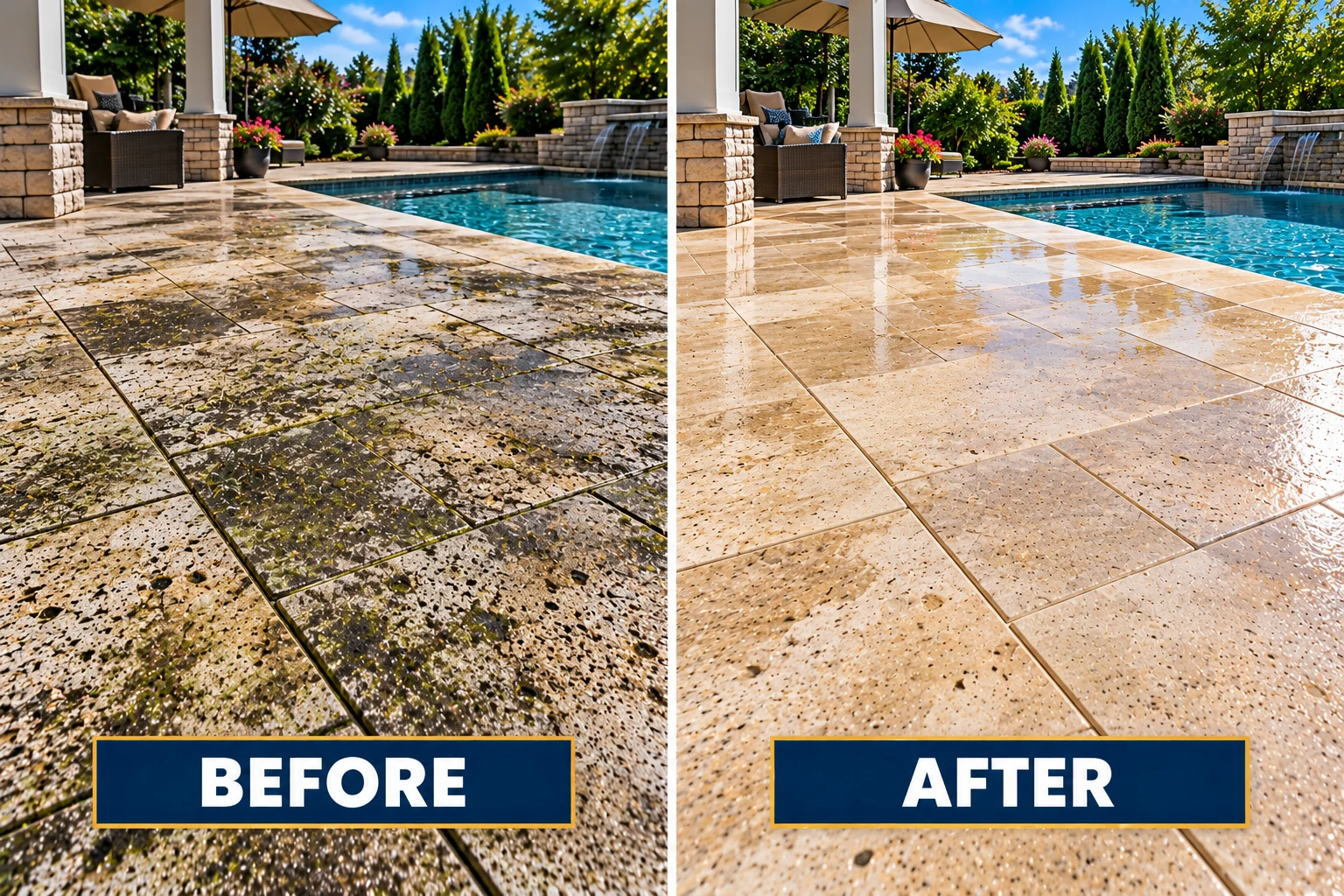
Patios and pool decks collect grime from daily use. Walkways gather mud, leaves, and pollen. Meanwhile, shaded areas may develop algae or other organic growth.
At Ohio Power Washing, we assess the surface before choosing a method. Our goal is to clean your stone while respecting the material underneath.
Different Types of Stone Need Different Care
Two patios may look similar but react differently to a cleaner. That is why material identification comes first.
Travertine
Travertine has natural pores and may contain filled areas. Those details affect cleaning. We also consider its finish and condition before treating buildup.
Limestone and Marble
These stones are sensitive to acid. Vinegar and harsh acidic products can leave dull marks. Cleaning must respect both the stone and its finish.
Slate and Flagstone
Flagstone describes paving pieces, rather than one specific stone. Some surfaces have layers or weathered edges. We check their condition before washing.
Granite and Other Dense Stone
A dense surface still needs suitable care. Its finish, joints, and past treatments can affect the result. Durability does not make every cleaner appropriate.
Natural Stone Is Different From Concrete Pavers
Concrete pavers and manufactured stone have their own care requirements. Let us know what was installed, and share supplier information if available.
Common Outdoor Stone Cleaning Projects
Stone appears in many areas around a home. Each location brings different access and drainage needs.
- Patios: Remove everyday buildup around seating and outdoor dining areas.
- Walkways: Address dirt and organic growth along garden paths and entry routes.
- Pool decks and coping: Plan carefully around pool water, equipment, and wet walking areas.
- Porches and steps: Clean landings and tread surfaces while checking loose pieces.
- Garden walls: Assess stone faces, mortar, and nearby planting beds.
- Exterior stone accents: Review joints, openings, and water entry concerns before cleaning.
Tell us which areas need attention when requesting an estimate. That helps us define the work clearly.
How We Approach Stone Cleaning
More pressure is not always better. A careful process starts with a test and uses the least aggressive effective method.
Inspect and Test
We review visible buildup, damaged joints, and existing coatings. A small test area helps check how the surface responds.
Prepare the Area
Clear access allows more even cleaning. We also plan for nearby landscaping, furniture, drains, and pool areas.
Use a Suitable Cleaner
We select treatment for the stone and the type of buildup. Application and exposure time follow the product’s directions.
Rinse and Review
Controlled rinsing removes loosened residue. Once the stone dries, we can better assess remaining marks and discuss suitable next steps.
Equipment settings must suit the installation. Fragile edges, weak mortar, and loose joint material need extra care. A setting used on a concrete driveway may be wrong for natural stone.
Surface Dirt, Deep Stains, or Stone Damage?
These problems can look alike. However, they need different solutions.
Organic Buildup
Algae and grime often collect in shaded or damp areas. Suitable treatment can address this buildup. Improving drainage and removing debris may help slow its return.
Oil, Rust, and Leaf Stains
Absorbed stains may need targeted treatment beyond routine washing. Some require a poultice, which draws staining material from the stone. Deep marks may remain after treatment.
White Mineral Residue
White deposits can relate to water and salts. First, identify the deposit and its moisture source. A generic acid wash can damage sensitive stone.
Etching and Worn Finishes
A dull patch may be a change in the surface itself. Cleaning alone will not correct every etched or worn area. A stone restoration specialist may need to refinish it.
Why Travertine Needs Extra Care
Avoid vinegar and general-purpose acidic cleaners on travertine. Choose products approved for the stone, its finish, and any existing sealer. Always test before treating a larger area.
Should You Seal Stone After Cleaning?
Optional sealing may help suitable stone resist staining. However, not every stone or installation needs a sealer.
The choice depends on absorbency, exposure, and existing treatments. The stone must also meet the product’s preparation and drying requirements.
- Natural-look products: Some penetrating treatments preserve the stone’s appearance.
- Color-enhancing products: These can deepen the color. A sample shows how the finish may change.
- Stain resistance: Water repellency and oil resistance are different. Check the product’s intended protection.
- Outdoor suitability: Pool exposure, moisture, and walking conditions matter when choosing a treatment.
Sealer does not repair cracks or make stone stain-proof. It also does not make a wet surface slip-proof. Around pools and steps, finish selection needs particular care.
Ask us to assess cleaning and optional protection together. We will explain which options suit your surface.
Simple Ways to Keep Outdoor Stone Cleaner
Regular care helps reduce buildup between professional visits.
- Sweep away leaves and grit before they collect in damp areas.
- Blot spills promptly rather than spreading them across the stone.
- Use a stone-approved routine cleaner and rinse away residue.
- Adjust sprinklers that repeatedly wet the same area.
- Check drainage where puddles remain after rain.
- Keep furniture feet in good condition to reduce scratches and rust marks.
In Central Ohio, seasonal debris and winter weather can change outdoor surfaces. Follow your stone supplier’s guidance for winter care and deicing products.
Cleaning frequency depends on shade, traffic, and exposure. There is no single schedule for every patio.
Stone Cleaning Questions
Can you pressure wash travertine?
Aggressive pressure can damage the surface, filled areas, or joints. Travertine needs a tested method and controlled rinsing that suit its condition.
Will cleaning restore the original color?
Removing buildup can reveal the stone’s natural appearance. However, fading, deep stains, and surface damage may remain. We discuss realistic expectations before work begins.
Does every stone patio need sealing?
No. The need depends on the stone, installation, and exposure. Existing treatments also matter. A suitable assessment helps avoid applying an unnecessary or incompatible product.
Can you fix loose stone or damaged mortar?
Cleaning does not repair the installation. Loose pieces and failing joints may need an installer or masonry professional before washing.
How much does stone cleaning cost?
Area size, stone type, staining, access, and condition affect pricing. Optional protection is a separate consideration. Request an estimate for a clear scope of work.
How should I prepare for service?
Clear furniture and décor from the work area. Keep pets away and provide access to water. Tell us about loose stone, previous sealers, and drainage concerns before your appointment.
Give Your Outdoor Stone the Care It Deserves
Talk with Ohio Power Washing about stone cleaning and suitable protection options in the Columbus area. We will help you understand the process and expected results.