

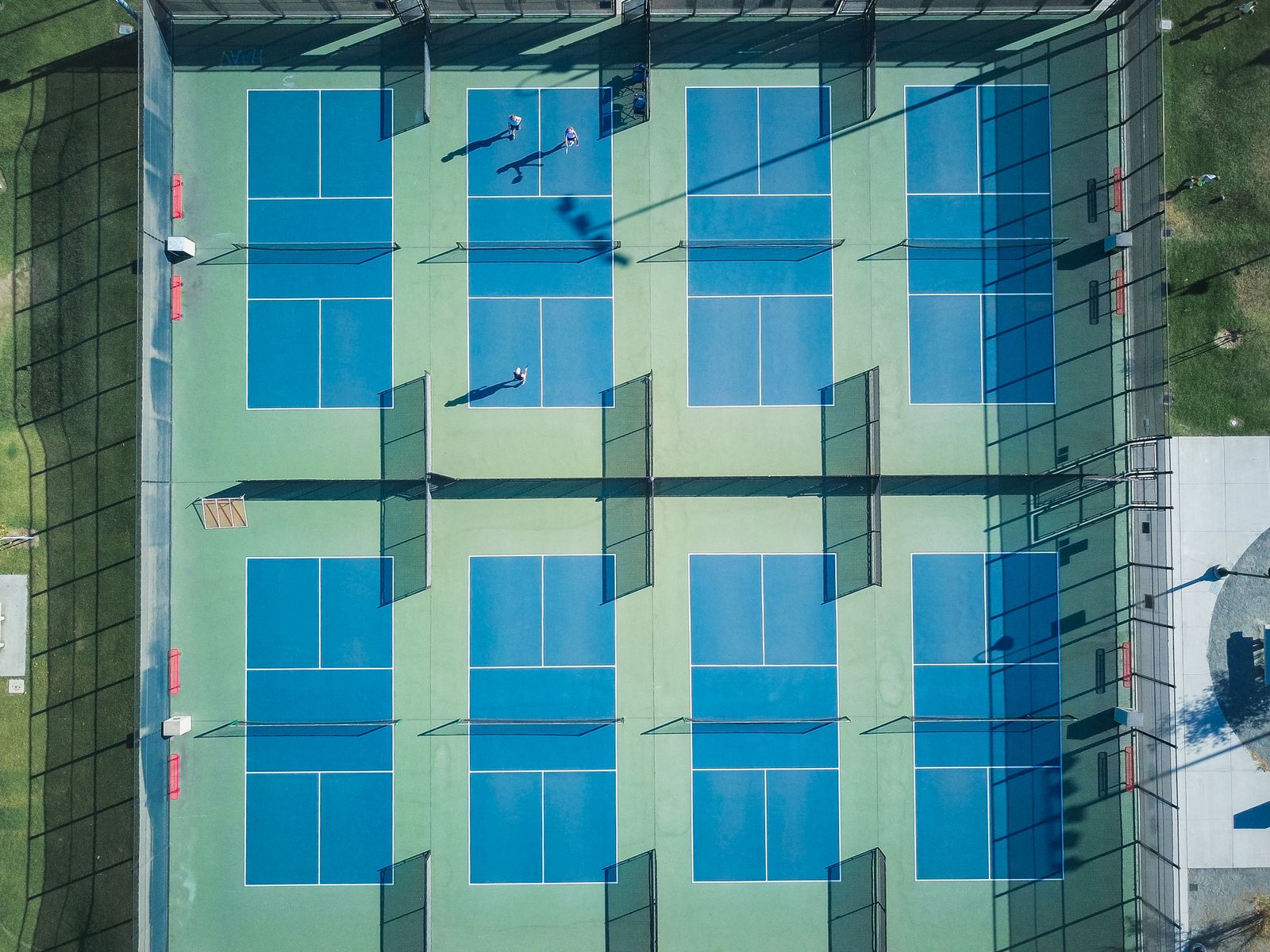
Tennis Court Cleaning:
Less Pressure.
More Care.
A cleaner court starts with understanding its surface. Learn how low-pressure cleaning can remove buildup while respecting the coating, court lines, and playing texture.
A tennis court is more than painted pavement.
The goal is to remove what does not belong on the court without removing what makes it a court.
Many outdoor hard courts have acrylic surfacing over asphalt or concrete. Those layers provide color and playing texture. Cleaning should follow the coating manufacturer’s instructions and account for the surface’s age and condition.
Know your court before you clean.
This guide focuses on coated hard courts. Clay, natural grass, artificial turf, and modular tile courts need different care. Locate your installation or resurfacing records before choosing a cleaning method.
Why low pressure matters
A concentrated spray can strip coatings, damage lines, or wear away the surface texture. More pressure is not a substitute for a suitable cleaner and a careful technique.
“Low pressure” alone does not guarantee a safe result. Nozzle selection, working distance, exposure time, and existing wear all matter. Begin with the gentlest effective method, follow the surface manufacturer’s limits, and test a small area.
There is no universal safe PSI.
A setting suitable for one coating may damage another. A court should never automatically receive the same treatment as a driveway.
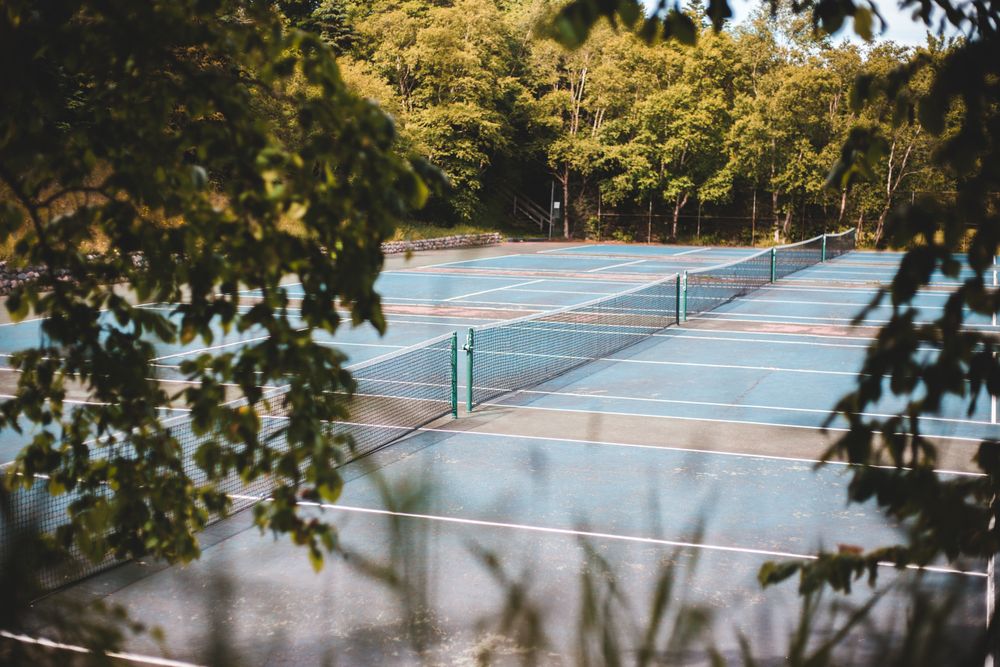
A careful approach, from inspection to final rinse
Before arranging cleaning, share the court’s surface type, coating history, access details, and any known drainage problems. Photographs help explain concerns, but the cleaning plan should be confirmed after inspecting the surface.
-
Inspect and plan
Check for peeling, blisters, exposed pavement, and loose material. Mark areas requiring repair and plan how wash water will be managed before introducing detergent.
-
Clear the court
Remove movable items and loose debris. Use a suitable soft broom or blower rather than dragging equipment across the playing surface.
-
Test the gentlest treatment
A water rinse may be enough. Where needed, use a manufacturer-approved cleaner at its specified dilution and dwell time. Test first and avoid abrasive tools.
-
Clean with controlled pressure
Use gentle agitation where permitted and consistent, low-pressure rinsing. Avoid holding a concentrated jet on one spot. Stop if coating begins to lift or wear.
-
Rinse, dry, and review
Rinse away cleaning residue and assess the court once dry. Keep play suspended until the surface is thoroughly dry and any remaining concerns have been addressed.
Cleaning has limits. Set expectations early.
Cleaning addresses surface contamination. It does not renew faded color, replace worn texture, repair cracks, or correct low spots. Some discoloration may remain after dirt is removed.
When to involve a court surfacing specialist
Peeling coatings, recurring puddles, and significant cracking deserve evaluation before cleaning proceeds. A repair or resurfacing plan may be the next step.
Small maintenance habits make a difference.
- Remove leaves and other debris regularly, especially in fall.
- Keep irrigation from spraying onto the playing surface.
- Keep drains and surrounding pathways clear.
- Avoid dragging benches or using hard-bristled scrubbing tools.
- Follow your coating manufacturer’s maintenance schedule.
Regular inspection helps you catch changes early. Professional cleaning should respond to the court’s condition rather than repeated aggressive washing on a fixed schedule.
Tennis court cleaning questions
Can I use my home pressure washer?
First check the coating manufacturer’s instructions. Equipment must allow appropriate pressure control and technique. If you cannot confirm compatibility, start with routine debris removal and seek surface-specific advice.
Should I use the same cleaner used on house siding?
Do not assume it is compatible. Court coatings require their own cleaning guidance. Use an approved product according to its label and never mix cleaning chemicals.
Will cleaning make faded court colors look new?
Removing buildup may improve appearance, but cleaning cannot replace faded or missing coating. Color restoration is a resurfacing question.
When can players return?
After the court is thoroughly dry, cleaning residue has been removed, and the surface has been checked. Drying time varies with shade, weather, and drainage.
Check the instructions for your specific surface system.
SportMaster court maintenance DecoTurf maintenance guideGive your court the care it deserves.
Have questions about buildup, surface wear, or preparing your tennis court for cleaning? Contact Ohio Power Washing to discuss your property and request an estimate.