

Paver Cleaning & Sealing: Clean, Re-Sand, and Protect
Refresh your patio, walkway, or paver driveway. Learn how cleaning, new joint sand, and compatible sealer work together to care for your outdoor space.
Request a Paver Clean & Protect EstimateWhat Is Paver Clean and Protect?
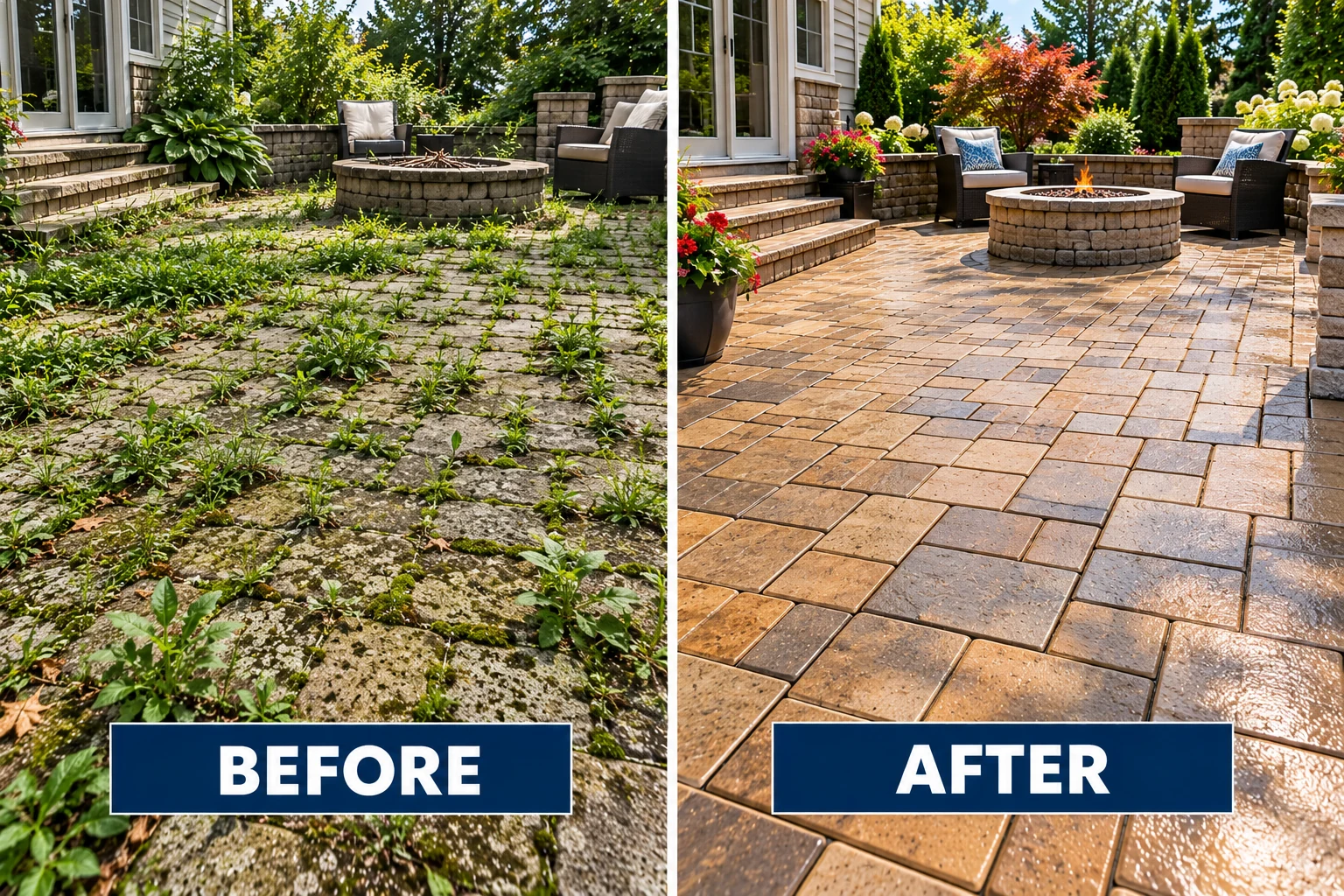
Paver cleaning and sealing combines surface care with joint maintenance and optional protection. Our clean-and-protect package includes cleaning, new joint sand, and sealer application.
We also offer cleaning only. However, we recommend the full package for suitable paver systems because it addresses more than the visible dirt.
The right plan depends on the pavers, existing coating, joints, and drainage. An assessment helps confirm which products and steps fit your property.
Cleaning Only or the Full Package?
Paver Cleaning Only
Removes surface dirt and buildup. It can suit pavers with sound joints or existing protection. New sand and sealer are not included unless specified.
Recommended: Clean and Protect
Combines cleaning, new joint sand, and compatible sealer. It refreshes the surface and addresses joint care as part of one planned project.
Cleaning can expose worn or missing joint material. Therefore, even a cleaning-only project needs a joint assessment afterward.
Some factory-protected pavers do not need another sealer. Other surfaces may have an incompatible old coating. We review those conditions before recommending the full package.
Step One: Clean the Paver Surface
Pavers collect soil, algae, moss, and residue from outdoor use. Leaves and spills can also leave stains below the surface.
We identify the material before selecting cleaners and equipment. Concrete pavers, clay brick, and natural stone may need different methods.
- Remove loose debris and accessible vegetation.
- Assess organic buildup and problem stains.
- Use compatible treatments and controlled washing.
- Work carefully around joints, edges, and landscaping.
- Rinse residue and manage wash water.
Excessive pressure can damage the paver face or remove joint material unnecessarily. The goal is effective cleaning with a method suited to the surface.
Oil, rust, leaf stains, and white mineral deposits may need separate treatment. Some deep marks or worn areas can remain after cleaning.
Step Two: Install New Joint Sand
Joint sand fills the spaces between pavers. In a suitable interlocking system, it helps the units work together and limits gaps where debris collects.
We assess the existing material and prepare joints for the selected product. Simply dusting new sand over failed joints is not a substitute for proper preparation.
Conventional Joint Sand
Correctly graded sand can suit some systems. A compatible joint-stabilizing sealer may help reduce washout where the product is designed for that use.
Polymeric Joint Sand
This contains binders that harden after correct activation. Product choice depends on joint width, depth, drainage, and the installation system.
Installation follows the sand manufacturer’s instructions. This may include compaction, surface cleanup, and controlled watering.
Removing residue before activation helps avoid haze on the paver faces. Next, the joint material must meet its curing requirements before compatible sealing.
New sand does not repair the base. Loose edges, settled areas, or moving pavers may need separate repairs before the clean-and-protect package.
Step Three: Apply a Compatible Sealer
A suitable sealer can help reduce absorption or improve resistance to certain stains. Some products also enhance color or add sheen.
However, sealers do not all provide the same protection. A basic water repellent should not be assumed to resist oil. Likewise, not every sealer stabilizes joint sand.
Natural-Look Protection
Some penetrating treatments preserve much of the original appearance. Protection and compatibility depend on the material and product formula.
Color-Enhancing Finishes
Some surface sealers deepen color or add sheen. Wet traction, moisture, and compatibility with previous coatings require careful review.
We review a test area before full application. The surface and joints must also meet the chosen products’ moisture and curing requirements.
Sealer cannot fix cracks, correct drainage, or eliminate future weeds. It also does not make pavers stain-proof.
How We Plan the Full Package
Assess and Quote
Review the pavers, joints, old coatings, and access. Define cleaning, sand preparation, sealing, and any specialty stain treatment.
Clean and Prepare
Remove buildup with controlled methods. Prepare suitable joints and allow the required drying time.
Re-Sand the Joints
Install compatible joint material according to its instructions. Complete any required activation and curing.
Seal and Review
Apply the selected sealer within its weather limits. Explain curing times, return-to-use instructions, and ongoing care.
The package may require more than one visit. Rain, shade, joint-material curing, and surface moisture can affect the schedule.
Will Cleaning and Sealing Stop Weeds?
Cleaning removes visible growth and accumulated debris. Proper joint care can also help reduce conditions that support weeds.
Still, seeds can land in dirt that collects on top of the joints. Nearby roots or drainage problems may also need attention.
Neither polymeric sand nor sealer guarantees a weed-free patio. Regular sweeping and prompt removal of new growth remain important.
Choose protection with wet traction in mind. Some glossy coatings can make wet pavers more slippery. Review the surface texture and product guidance before selecting a finish.
Keep Your Pavers Looking Better
Simple maintenance supports the work between professional visits:
- Sweep leaves and soil before they settle into the joints.
- Clean spills promptly with a compatible method.
- Check beneath planters and rugs for trapped moisture.
- Keep drainage paths clear.
- Inspect joints and edge restraints for wear.
- Avoid aggressive pressure washing that damages the finish or joints.
Resealing depends on the product and surface condition. There is no single schedule for every patio. An old, failing coating may need treatment before another application.
Paver Cleaning and Sealing in Columbus and Central Ohio
Ohio Power Washing offers paver cleaning for patios, walkways, and suitable paver driveways. For compatible systems, we recommend our cleaning, new joint sand, and sealer package.
Send photos and tell us about weeds, stains, old sealers, or settled areas. We will help define the work your outdoor space needs.
Before service, clear furniture, rugs, and planters. Keep pets and children away until the area is ready for use.
Request a paver clean-and-protect estimate or ask about cleaning only.
Paver Cleaning and Sealing Questions
Can I book paver cleaning without sealing?
Yes. We offer cleaning only. We still assess the joints and explain any maintenance needed after washing.
Why do you recommend the full package?
For suitable systems, it combines surface cleaning, new joint sand, and compatible protection. This addresses more of the patio’s condition than washing alone.
Do you use polymeric sand on every patio?
No. The joint dimensions, paver material, drainage, and installation determine the right product. We select compatible joint material for the project.
Will the sealer make my pavers glossy?
Not necessarily. Natural-look and enhancing finishes differ. Review the selected product and a test area before full application.
When can I use the patio again?
Follow the joint sand and sealer instructions provided after service. Foot traffic, furniture, and vehicles may have different waiting times.
Refresh Your Pavers from Surface to Joints
Choose cleaning only or ask about our recommended clean-and-protect package with new joint sand and sealer. Serving Columbus and Central Ohio.
Request Your Free Estimate