
Rust Stain Removal:
What Works on Exterior Surfaces?
Orange marks on your driveway, patio, or brickwork? Learn where rust stains come from, why ordinary washing may leave them behind, and how surface-specific treatment can help.
Request a Rust Stain AssessmentRust stain removal takes more than turning up the pressure. Orange and brown marks can remain after dirt and algae have washed away. The right approach starts with identifying the stain and the surface beneath it.
This guide explains common exterior rust stains for Columbus and Central Ohio property owners. It also covers treatment limits, prevention, and what to share when requesting an estimate.
Start with the source: Cleaning can improve a stained surface. However, rusty metal or iron-rich water may leave new marks unless the source is addressed.
What Causes Rust Stains Outside?
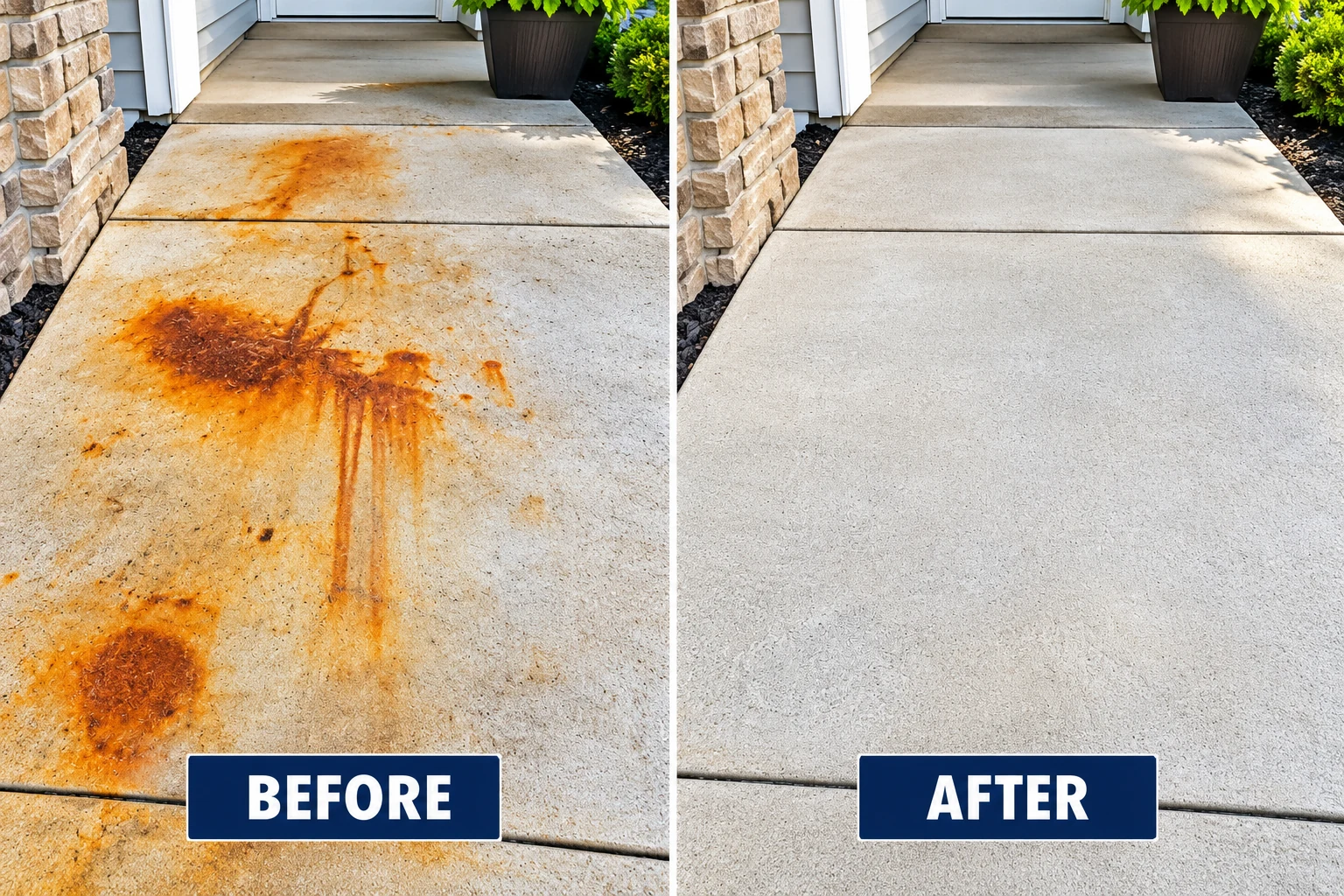
Rust forms as iron corrodes. Moisture can carry the resulting deposits onto nearby surfaces. Porous concrete and masonry can hold that discoloration, making it harder to remove than loose dirt.
Metal Furniture and Fixtures
Patio chairs, planters, railings, and other metal items can leave orange rings, outlines, or runoff trails.
Fertilizer Granules
Iron-containing fertilizer left on paving can produce scattered orange spots when it gets wet.
Irrigation Water
Water containing iron can stain surfaces reached by sprinkler spray. Repeated exposure can create broad orange patches.
Metal Runoff
Corroding hardware or metal above a wall can leave streaks below it. The shape of the stain helps locate the source.
For example, small marks beneath chair legs suggest a different source than a wide stain along a sprinkler’s spray pattern. Therefore, a wider photo is often as helpful as a close-up.
Is Every Orange Stain Rust?
No. Red clay, leaf staining, certain chemical damage, and other deposits can resemble rust. Color alone does not confirm the cause.
A careful assessment considers the pattern, location, and history of the stain. It also checks for nearby metal, recent fertilizer use, and irrigation exposure. A test area can then help establish how the surface responds.
Cracked concrete needs a closer look. Rust-colored marks near exposed metal, cracks, or broken concrete may involve corrosion within the structure. Surface cleaning does not repair that condition. Ask a qualified repair professional to assess it.
Why Pressure Washing Alone May Not Remove Rust
Pressure washing helps remove loose dirt and some surface buildup. However, a mineral stain can remain within a porous surface after routine cleaning.
That is why rust stain removal may require a compatible specialty cleaner. The treatment targets the deposit, while suitable cleaning and rinsing support the process.
Increasing pressure can create a second problem. Aggressive washing may leave uneven marks, damage mortar, or alter a finish. More force does not replace correct identification.
Rust Stain Removal on Different Surfaces
Concrete Driveways and Sidewalks
Concrete commonly collects marks from furniture, metal objects, and fertilizer. The surface’s condition matters. Decorative finishes, coatings, and previous chemical damage may change the treatment options.
Paver Patios and Walkways
Colored pavers need a method that respects their finish and joint material. A cleaner suitable for plain concrete is not automatically suitable for every paver. Testing helps check for unwanted color changes.
Brick and Mortar
Rust trails can run down brick below metal fixtures. Both the brick and mortar must tolerate the selected treatment. Loose joints or damaged masonry may need repair before cleaning.
Natural Stone
Stone requires individual identification. Marble, limestone, and other acid-sensitive stone can be damaged by unsuitable cleaners. Some embedded stains may need specialist treatment and may remain visible.
Siding and Painted Surfaces
Metal runoff can stain exterior siding or painted trim. Product compatibility is essential because the underlying coating may be sensitive. Cleaning also will not restore paint that has already deteriorated.
Commercial Entrances and Outdoor Areas
Storefront walkways, courtyard paving, and outdoor seating areas can collect rust marks. A cleaning plan should consider pedestrian access, nearby glass, landscaping, and the materials surrounding the stain.
What Does a Professional Removal Process Involve?
The goal is to improve the stain while preserving the surface. Exact preparation, application, and rinsing steps depend on the selected product and its instructions.
Inspect the Stain
Identify the material, likely source, existing damage, and any sealer or coating.
Test the Method
Treat a small, discreet area. Review the dried result before expanding the work.
Apply Suitable Treatment
Use a compatible rust-specific product where appropriate. Protect adjacent materials and follow label directions.
Review the Results
Complete the required cleanup and assess the dry surface. Discuss any remaining discoloration and its likely cause.
Some stains improve substantially. Others may leave a faint shadow or need additional assessment. Stain depth, surface condition, and previous treatments all affect the outcome.
Common Rust Cleaning Mistakes to Avoid
- Using the same cleaner everywhere. Concrete, stone, paint, and metal do not respond identically.
- Scrubbing with metal tools. Abrasive tools can scratch finishes or leave metal particles behind.
- Trying stronger acid without testing. An unsuitable product can etch or discolor a surface.
- Mixing cleaning products. Follow the product label and never combine cleaners.
- Ignoring nearby materials. Glass, metal fixtures, plants, and coatings may need protection.
- Expecting stain removal to repair damage. Etching, coating failure, and deteriorated concrete need separate solutions.
A small test area is useful because a wet surface can hide differences. Judge the result after the area has dried.
How to Reduce New Rust Stains
Once the surface is cleaned, address what caused the marks. This gives the improvement a better chance of lasting.
- Replace or repair corroding furniture feet and fixtures.
- Use suitable protective pads beneath metal furniture.
- Sweep stray fertilizer granules off paving promptly, following the fertilizer label.
- Adjust irrigation so it does not repeatedly spray walls or paved areas.
- Ask an irrigation or water-treatment professional about recurring iron staining.
- Have deteriorated hardware or suspected structural corrosion assessed.
A sealer is not a guarantee against rust. If protection is being considered, choose a product compatible with the material and its intended use.
Rust Stain Removal in Columbus and Central Ohio
Have orange marks that remain after routine cleaning? Contact Ohio Power Washing to discuss your property and whether specialty treatment is appropriate.
Send a close-up photo and a wider view of the area. Include the surface material, approximate size, and anything you know about the stain’s source. Also mention any sealer or cleaner previously used.
This information helps us understand the project and discuss realistic expectations. Whether the concern is a residential patio or a commercial entrance, the right plan starts with the surface.
Request Your Rust Stain EstimateRust Stain Removal Questions
Can rust stains be removed from concrete?
Many concrete rust stains can improve with suitable treatment. Complete removal is not guaranteed. A test area helps evaluate the stain and the surface.
Will bleach remove rust stains?
Bleach used for organic growth is not a substitute for a rust-specific treatment. Identify the deposit and choose a product approved for the material.
Can rust come back after cleaning?
Yes. Corroding metal, fertilizer, or iron-rich irrigation water can create new staining. Addressing the source helps reduce recurrence.
Is rust removal safe for colored pavers?
It depends on the paver and the treatment. Follow manufacturer guidance and test a small area first. Do not assume every concrete cleaner suits colored paving.
Can cleaning fix cracked or etched concrete?
No. Cleaning targets deposits. It does not repair cracks, replace lost material, or restore an etched finish.
How much does rust stain removal cost?
Cost depends on the surface, stain severity, area, access, and treatment required. Photos and a property-specific assessment help establish an estimate.
Orange Stains Deserve the Right Approach
Get a clear plan for your exterior surfaces. Contact Ohio Power Washing to discuss rust staining and request an assessment.
Request a Rust Stain Cleaning Estimate